
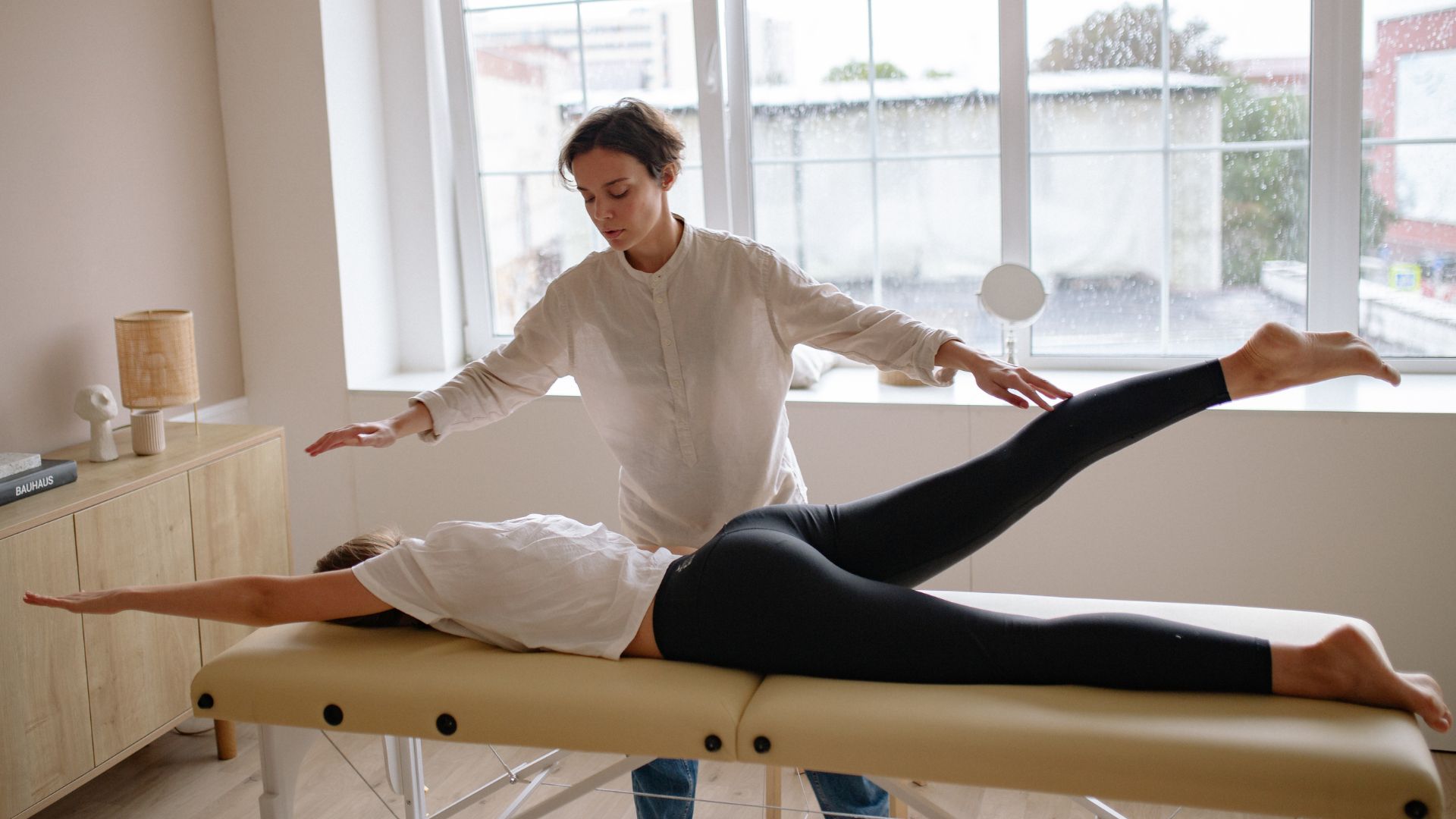
Back pain has a way of taking over your life. It shows up when you’re sitting, standing, sleeping, and even just trying to get through your daily activities. If you’ve been spending hours at a desk or dealing with chronic back pain, your spine is probably screaming for some relief.
The good news? There are simple exercises you can do at home to help relieve pressure on your spine, improve posture, and support long-term relief between professional treatments. This guide breaks down seven of the most effective spinal decompression exercises you can try at home, along with what you should know before getting started.
What Is Spinal Decompression and Why Does It Matter?
Spinal decompression refers to any technique that reduces compression along the spinal column. Throughout the day, gravity, poor posture, and physical stress compress your intervertebral discs and squeeze the space between your vertebrae. Over time, this can cause pain, nerve irritation, radiculopathy, and even conditions like sciatica or spinal stenosis.
Decompression aims to reverse this process by gently stretching the spine and creating negative pressure within the discs. This encourages nutrient-rich blood flow back into the affected areas and allows tight muscles surrounding the spinal cord to relax. To learn more about the clinical side of this approach, check out how spinal decompression therapy works and what to expect.
The benefits of spinal decompression go beyond just pain relief and flexibility. Regular decompression exercise can improve spinal alignment, reduce inflammation, and help your body heal more naturally, without relying on surgery or medication.
Who Can Benefit From At-Home Spinal Decompression?
These exercises can help a wide range of people, including those dealing with:
- Lower back pain or low back pain from a disc herniation
- Sciatica or leg pain from nerve compression
- Upper back and neck stiffness
- Spinal stenosis or chronic compression
- Postural imbalances from long periods of sitting
That said, it’s important to consult a healthcare professional before starting any new decompression routine, especially if you have a known spinal condition or are recovering from an injury. These exercises are designed to support your spine care, not replace professional treatment.
7 Spinal Decompression Exercises To Try at Home
Discover these spinal decompression exercises below, organized by difficulty and body position. They are simple, require no special equipment in most cases, and can be performed in the comfort of your home.
Child’s Pose Stretch
Child’s Pose is a foundational decompression exercise borrowed from yoga. Start on your hands and knees, then slowly lower your hips back toward your heels while extending your arms forward on the floor. Let gravity do the work as you breathe deeply and allow your lumbar spine to lengthen.
Hold for 30 to 60 seconds. This stretch targets the lumbar region and helps decompress the spine by gently separating the vertebrae and releasing tension in the back muscles and the quadratus lumborum muscle.
Cat-Cow Stretch
This dynamic exercise alternates between two positions to encourage spinal mobility. Begin on your hands and knees with a neutral spine. As you inhale, let your belly drop toward the floor and lift your head and tailbone. This is the Cow position. As you exhale, arch your back toward the ceiling. This is the Cat position.
These movements promote circulation, release tight muscles, and help relieve symptoms of compression along the thoracic and lumbar spine. Repeat 10 to 15 slow, controlled cycles.
Supine Knee-to-Chest Stretch
Lie on your back on a firm surface. Bring one knee to your chest, holding it gently with both hands while keeping the opposite leg flat or slightly bent with feet planted on the floor. Hold for 20 to 30 seconds, then switch sides.
This position helps relieve pressure in the lower back and hip area while gently creating traction through the lumbar spine. It is particularly effective for those experiencing low back pain or discomfort that radiates into the leg.
Pelvic Tilt
The pelvic tilt is a subtle but powerful exercise that helps stabilize your spine and engage the core muscles responsible for spinal support. Lie on your back with your knees bent and feet flat. Gently flatten your lower back against the floor by tightening your abdominal muscles and tilting your pelvis slightly upward.
Hold for five seconds, then release. This exercise helps alleviate pain caused by postural imbalance and compressive forces in the lower back. It is also one of the most commonly recommended movements in physical therapy for low back pain relief.
Hanging Decompression (Dead Hang)
If you have access to a pull-up bar, the dead hang is one of the most effective spinal decompression techniques you can do at home. Simply grip the pull-up bar with both hands and let your body hang freely with arms fully extended. This uses gravity to stretch the spine in the opposite direction of gravity’s usual compressive effect.
Start with 20 to 30 seconds and work up gradually. This technique can help alleviate pain from disc herniation, sciatica, and radiculopathy by creating traction along the spinal column. Learn more about the dead hang spinal decompression technique and how to perform it safely.
Cobra Pose
The Cobra Pose is a gentle back extension exercise that helps counteract the forward-flexion posture many people maintain while sitting. Lie face down with your palms flat beneath your shoulders. Slowly press through your hands and lift your chest off the floor, keeping your hips grounded. Do not arch your back forcefully; the movement should feel like a gentle opening through the chest and spine.
Hold for 15 to 30 seconds and repeat three to five times. This exercise encourages spinal extension, relieves pressure on the front portion of the intervertebral disc, and helps improve posture over time.
90/90 Lumbar Decompression (Chair Supported)
Sit in a sturdy chair and place your lower legs on another chair or cushion in front of you so that both your hips and knees are at approximately 90-degree angles. This position reduces load on the lumbar spine and allows the joints and discs to decompress passively.
Stay in this position for five to ten minutes while focusing on relaxed breathing. This is one of the most approachable home spinal decompression techniques for people who struggle to get down on the floor. It is also a helpful position for reducing pain levels after a long day on your feet or at a desk.
Tips for Performing Spinal Decompression Exercises Safely
Performing spinal decompression at home can be safe and effective when done correctly. Here are a few guidelines to keep in mind:
- Warm up with light cardio or a short walk before starting your decompression routine
- Move slowly and avoid any position that causes sharp or shooting pain
- Focus on your breathing throughout each exercise to encourage muscle relaxation
- Know which exercises and for how long you want to perform the exercises, based on your current pain levels and fitness level
- Always cool down after your session with gentle movement or progressive muscle relaxation
If your symptoms include paresthesia, hypoesthesia, or significant leg pain, consulting a healthcare professional is not just recommended; it is essential.
When At-Home Exercises Are Not Enough
At-home spinal decompression exercises are simple and can deliver real results, but they are not a substitute for clinical care. Conditions like disc herniation, spinal stenosis, and chronic sciatica often require non-surgical spinal decompression performed by a qualified clinician.
At Elite Chiropractic Rehab and Wellness in Walnut Creek, California, spinal decompression therapy (opens in a new tab) is delivered using advanced equipment and a personalized approach tailored to your spine health and recovery goals. Combined with chiropractic care, massage therapy, and other treatments, it can provide back pain relief that goes beyond what various decompression stretches at home can achieve alone.
These exercises also work best as part of a broader care plan. If you’re dealing with sciatica specifically, explore spinal decompression for sciatica relief (opens in a new tab) to understand how targeted treatment can help relieve symptoms more effectively. And if you have ever wondered whether an inversion table might be a better fit, read this spinal decompression vs. inversion table comparison (opens in a new tab) to help you decide.
Effective spinal decompression is not one-size-fits-all. It requires understanding your body, your condition, and the right mix of home-based strategies and professional support.
Conclusion
These seven exercises can help alleviate pressure, improve posture, and support spinal health when practiced consistently. Incorporate these exercises into your daily routine, and you may be surprised by how much relief is possible at home. Discover effective spinal decompression as part of your daily routine, and you may be surprised how much relief is possible at home. But if the pain persists or worsens, do not wait.
The team at Elite Chiropractic Rehab and Wellness in Walnut Creek is ready to get you back to feeling your best. Call 925-476-5070 (opens in a new tab) or visit elitecrw.com (opens in a new tab) to schedule your consultation today.