
Back pain has a way of taking over your life. It disrupts your sleep, limits your movement, and makes even simple tasks feel like a challenge. If you’ve been dealing with chronic back pain, a herniated disc, or sciatica, you’ve probably heard a range of treatment options, some involving surgery, some not. Non-surgical spinal decompression is one that often gets overlooked, despite being one of the more effective and accessible options available today.
This guide breaks down what non-surgical spinal decompression actually is, how it works, who it’s best suited for, and what you can realistically expect from the process. No hype, no pressure, just clear, useful information so you can make an informed decision about your spine health.
What Is Non-Surgical Spinal Decompression?
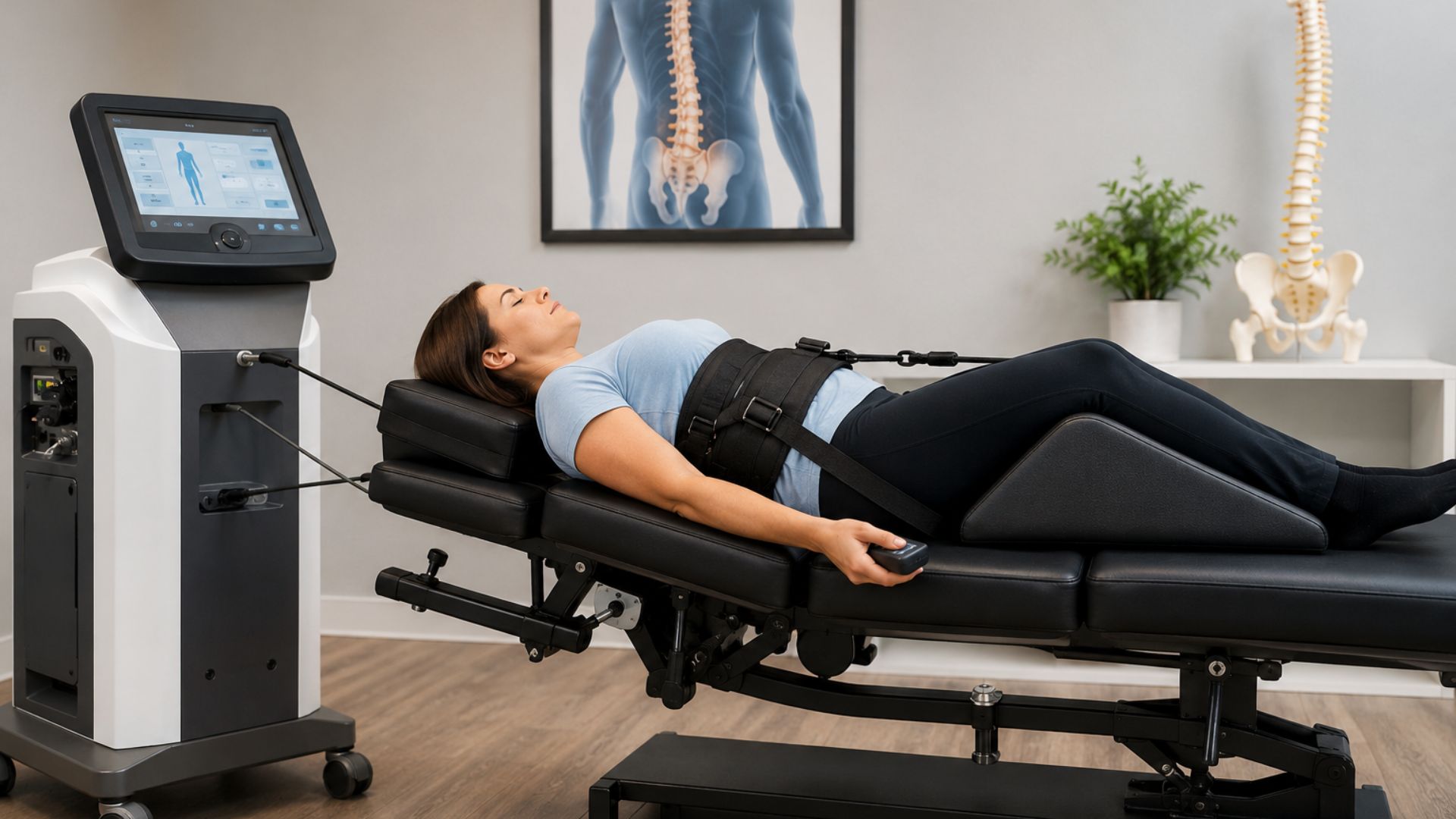
Non-surgical spinal decompression is a motorized traction therapy designed to gently stretch the spine. The goal is to relieve pressure on compressed spinal discs and nerves by creating negative pressure within the disc itself. Think of it as creating a kind of vacuum effect that encourages herniated or bulging disc material to retract back into place.
This is different from basic traction, which simply stretches the spine with consistent force.
Decompression therapy uses a computer-controlled table that alternates between stretching and relaxing movements. That variation in force is what may make it more effective at supporting disc healing and fluid exchange.
The treatment is done while you’re fully clothed. You’re secured to a specialized table, and the machine does the work, slowly, precisely, and without any sudden movements.
How Does Spinal Decompression Work?
To understand why this therapy is effective, it helps to know a little about spinal disc mechanics.
The discs between your vertebrae act as shock absorbers. They’re filled with a gel-like fluid that keeps them hydrated and flexible. When a disc is compressed, due to injury, poor posture, aging, or repetitive strain, it can bulge, herniate, or degenerate, putting pressure on surrounding nerves.
Spinal decompression therapy (opens in a new tab) addresses this by creating negative intradiscal pressure. When the spine is gently stretched and released in a controlled rhythm, it creates a pressure differential that draws water, oxygen, and nutrients back into the disc. Over time, this helps the disc heal from within.
For many patients, this process also takes pressure off the spinal nerves, which is why people with sciatica and radiating leg pain often find relief through decompression therapy. For a deeper technical breakdown, this understanding of spinal decompression therapy resource (opens in a new tab) walks through the mechanics in more detail.
Who Is a Good Candidate for This Therapy?
Non-surgical spinal decompression isn’t a one-size-fits-all solution, but it does have a broad range of appropriate candidates. The people who tend to benefit most are those dealing with:
- Herniated or bulging discs – One of the most common reasons patients seek decompression therapy. The therapy helps retract disc material and reduce nerve irritation.
- Degenerative disc disease – As discs wear down with age, decompression can slow the process and reduce pain by restoring hydration to the disc.
- Sciatica – When disc pressure compresses the sciatic nerve, patients experience pain, tingling, or numbness that can radiate from the lower back down through the leg. Decompression relieves that nerve compression directly.
- Posterior facet syndrome – Pressure on the small joints of the spine can cause localized back pain that responds well to this therapy.
- Spinal stenosis – Narrowing of the spinal canal can put pressure on nerves; decompression creates space and may reduce symptoms.
- Failed back surgery syndrome – For patients who’ve had surgery that didn’t produce the expected results, spinal decompression can sometimes offer relief where other treatments have not.
That said, not everyone is a candidate. People with fractures, tumors, advanced osteoporosis, spinal fusion hardware, or who are pregnant are typically not suitable for this type of treatment.
A proper evaluation from a qualified clinician is essential before starting any spinal decompression program.
What to Expect During a Spinal Decompression Session
First-timers often come in wondering if the therapy will be painful. For most people, it’s actually quite comfortable; many patients describe it as a gentle pulling sensation, and some even fall asleep during sessions.
A typical session lasts between 30 and 45 minutes. You’ll lie on a specialized table, either face up or face down, depending on which area of the spine is being treated. A harness is fitted around your hips (for lumbar decompression) or your neck (for cervical decompression). The table then gently stretches and releases in programmed intervals.
Most treatment plans consist of 15 to 30 sessions spread over several weeks. The frequency depends on the severity of your condition and how your body responds. Some patients notice improvement within a few sessions; others require a full course before experiencing meaningful relief.
At Elite Chiropractic Rehab & Wellness in Walnut Creek, spinal decompression is integrated into a broader care plan. That often means combining decompression with chiropractic adjustments, massage therapy, or cold laser therapy to maximize results and support tissue healing alongside the decompression work.
Non-Surgical vs. Surgical Spinal Decompression: What’s the Difference?
The term “spinal decompression” can be confusing because it’s used in both surgical and non-surgical contexts. Surgically, decompression refers to procedures like laminectomies or discectomies, operations where a surgeon removes tissue to relieve nerve pressure. These come with recovery time, anesthesia risks, and the complications that come with any invasive procedure.
Non-surgical spinal decompression achieves a similar goal, relieving nerve pressure, but through external mechanical traction rather than removing tissue. It requires no incisions, no anesthesia, and no recovery downtime. Patients typically walk in and out of each session.
Surgery may be necessary in severe or emergency cases, for example, if there’s significant neurological compromise or loss of bladder and bowel function. But for a large percentage of chronic back pain patients, non-surgical options have been shown to produce significant improvement. Many physicians now recommend exhausting conservative treatment options, including spinal decompression, before considering surgery.
Is Non-Surgical Spinal Decompression Effective?
This is the question most patients really want answered. The honest answer is: yes, for many people, but it’s not guaranteed, and it works best as part of a comprehensive treatment approach.
Clinical studies on motorized spinal decompression therapy have shown promising results for reducing pain and improving function in patients with disc-related conditions. A study published in the Journal of Physical Therapy Science (opens in a new tab) found that patients with lumbar disc herniation who underwent spinal decompression therapy showed significant reductions in pain and improvements in functional ability compared to baseline measures.
The key variables are diagnosis accuracy, treatment consistency, and whether decompression is combined with complementary therapies. Patients who follow through with their full treatment plan and engage in recommended exercises or stretches between sessions tend to get the best outcomes.
It’s also worth noting that decompression therapy is not a quick fix. It works gradually by supporting the body’s own healing process. That requires realistic expectations and commitment to the treatment schedule.
How Spinal Decompression Fits Into a Broader Wellness Plan
One of the things that sets quality care apart is treating the whole picture, not just the symptom.
Spinal decompression is most effective when it’s part of a plan that addresses the root causes of your pain, whether that’s posture, muscle imbalance, movement patterns, or repetitive stress.
At Elite Chiropractic Rehab & Wellness (opens in a new tab), patients receiving spinal decompression often benefit from concurrent treatments that complement the decompression work. Chiropractic adjustments help restore proper spinal alignment. Massage therapy and myofascial release address soft tissue tension that may be contributing to compression. Cold laser therapy can reduce inflammation and accelerate tissue repair. Sports rehab therapy helps patients rebuild strength and movement patterns that protect the spine long-term.
This integrated approach is what tends to produce lasting results rather than temporary relief.
You’re not just treating a disc, you’re rehabilitating the entire structure and movement system that surrounds it.
Spinal Decompression in Walnut Creek: What You Should Know Before Starting
If you’re in the Bay Area and considering spinal decompression, there are a few practical things worth knowing before you start.
First, expect a thorough intake process. A good clinic will review your imaging (X-rays or MRI), take a detailed health history, and assess your posture and movement before recommending any treatment. This isn’t just protocol, it’s how you determine whether you’re actually a good candidate and what kind of plan makes sense for your specific condition.
Second, insurance coverage varies. Some plans cover spinal decompression when it’s billed as traction therapy; others do not. It’s worth calling your provider ahead of time to understand your benefits.
Third, commitment matters. If you start a decompression program, completing the full course of treatment gives you the best shot at real improvement. Dropping out after a few sessions because you feel slightly better is one of the most common reasons people don’t get the full benefit of the therapy.
The team at Elite Chiropractic Rehab & Wellness, led by Dr. Ben Rosenstein and Dr. Tony Cresci, works closely with patients to ensure the treatment plan is realistic, clearly explained, and adjusted as needed based on how the patient is progressing.
Frequently Asked Questions About Non-Surgical Spinal Decompression
How many sessions will I need?
Most treatment plans run between 15 and 30 sessions, typically scheduled three to five times per week in the initial phase. Your provider will assess your progress and adjust accordingly.
Is spinal decompression painful?
Most patients find it comfortable or even relaxing. You may feel a gentle stretching sensation, but it should not be painful. If you experience discomfort, your provider can adjust the settings.
Can spinal decompression replace surgery?
For many patients with herniated discs, sciatica, or degenerative disc disease, non-surgical decompression can deliver results without the risks and downtime of surgery. However, in cases with severe neurological involvement, surgery may still be necessary.
How soon will I feel the results?
Some patients notice improvement within the first few sessions. For others, meaningful relief comes midway through or after completing the treatment plan. Individual results vary based on the diagnosis, severity, and overall health of the patient.
Is it safe?
When performed by a trained clinician after a proper evaluation, non-surgical spinal decompression is considered a low-risk therapy. Contraindications are screened for before treatment begins.
Taking the Next Step Toward a Pain-Free Life
Back pain doesn’t have to be your new normal. Non-surgical spinal decompression offers a real, evidence-supported pathway to relief for people dealing with disc issues, nerve compression, and chronic spinal pain, without the risks of surgery or the dependency concerns of long-term medication use.
If you’re in Walnut Creek or the surrounding Bay Area and want to understand whether this therapy is right for your situation, the best move is to sit down with a knowledgeable clinician who can evaluate your specific case. Elite Chiropractic Rehab & Wellness is built around exactly that kind of personalized, thorough approach to care.
You can reach them (opens in a new tab) at 925-476-5070 or visit elitecrw.com (opens in a new tab) to schedule a consultation. And if you want to read more before making any decisions, the Spinal Decompression Therapy Overview (opens in a new tab) on their website is a solid place to start.
Your spine supports everything you do. It deserves proper attention, and the right care can make an enormous difference in how you move, feel, and live.