
If you have been dealing with chronic back pain, a herniated disc, or sciatica, someone has probably mentioned spinal decompression at some point. Maybe your doctor brought it up, or you stumbled across a spinal decompression machine on Amazon and started wondering if it could actually help.
The options range from clinical-grade systems used by chiropractors to simple back stretcher devices you can order online for under $50.
So what is actually worth your time and money? This guide breaks it all down.
What Is Spinal Decompression and How Does It Work?
Spinal decompression (opens in a new tab) is a type of traction therapy that gently stretches the spine to relieve pressure on compressed intervertebral discs and pinched nerves. When the lumbar spine or cervical spine is under chronic compression, the spinal discs lose their ability to absorb shock effectively. This leads to conditions such as herniated discs, degenerative disc disease, spinal stenosis, and radiculopathy.
The core idea behind the therapy is straightforward. By creating negative pressure within the spinal discs, this therapy encourages bulging or herniated discs to retract, improves blood flow, and allows nutrients and fluids to re-enter the disc tissue. That combination supports natural healing in a way that medication or rest alone typically cannot achieve.
The following sections break down both clinical and at-home options so you can better understand what each involves.
Clinical Spinal Decompression Devices vs. At-Home Options
Not all traction devices are created equal. There is a significant difference between what a trained chiropractor uses in a clinical setting and what you can buy online for home use.
Professional Spinal Decompression Systems
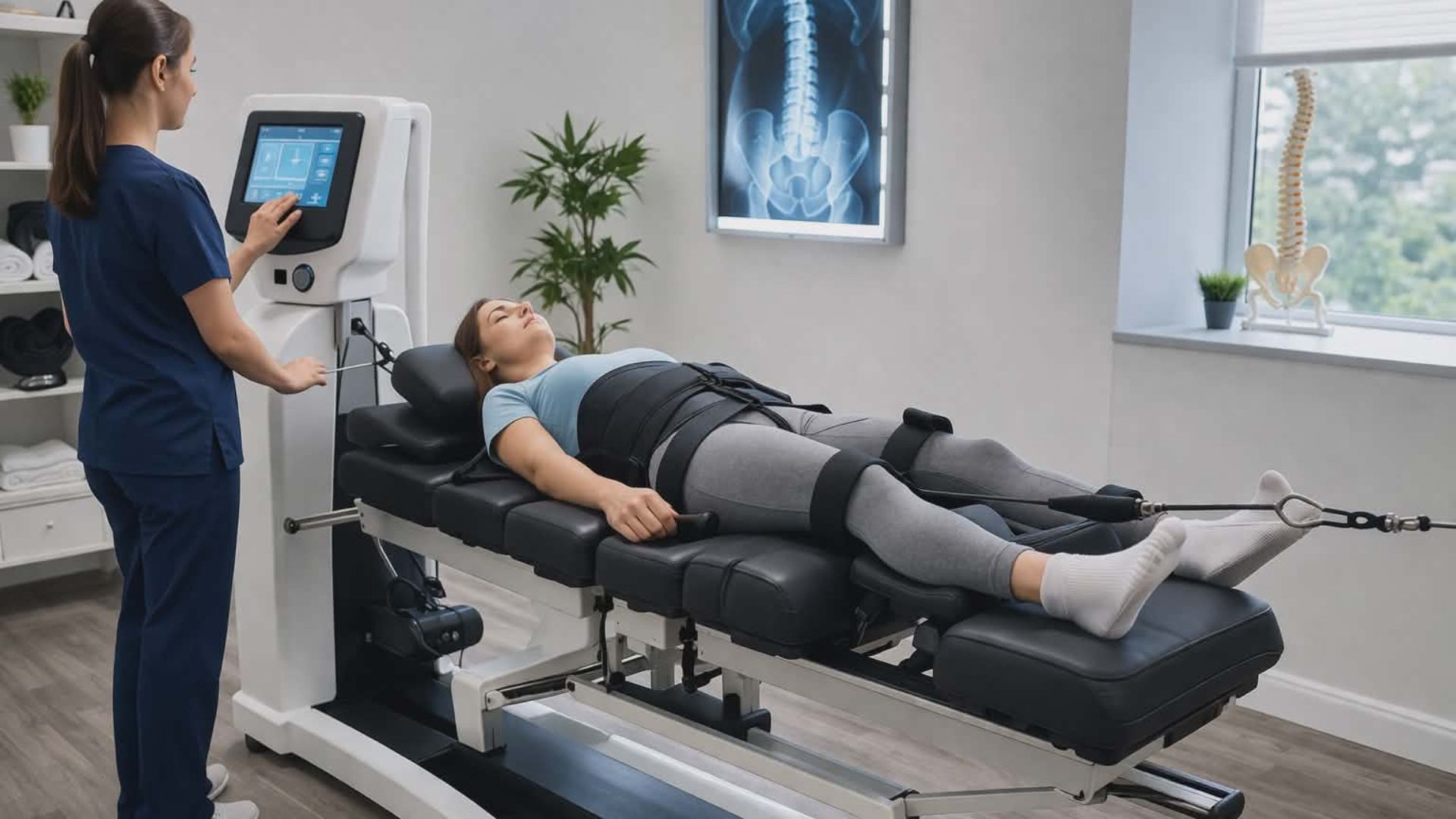
A clinical-grade spinal decompression system (opens in a new tab) uses computerized technology to apply precise, controlled traction force to both the cervical and lumbar spine. These systems can be customized for each patient based on their specific spinal issues, body weight, and diagnosis.
The decompression technology accounts for muscle guarding, adjusting tension in real time so the treatment remains comfortable and effective.
These machines can target the lumbar region, thoracic vertebrae, or cervical vertebrae with a level of accuracy that no home device can replicate. Treatment sessions in a clinic are overseen by a health professional who monitors your response throughout treatment.
At-Home Spinal Decompression Devices
The at-home spinal decompression market has grown significantly. You will find options including:
- Inversion tables – These flip your lower body upside down using gravity to decompress your spine passively. They can provide some relief but carry risks for people with certain conditions, including stenosis or high blood pressure. Read more about the spinal decompression vs. inversion table comparison to understand the key differences.
- Back stretcher devices – A curved stretcher for back pain relief that arches the lumbar region to open up spinal joints and stretch back muscles passively.
- Lumbar traction device – A belt-style lumbar decompression tool that uses air pressure or mechanical tension to relieve back tension in the lumbar disc area.
- Electric lumbar spinal massager stretcher – Combines heat, vibration, and traction in one device to relieve back stiffness and lumbar pain.
- Traction device with dynamic settings – More advanced home units that mimic clinical traction by adjusting tension throughout the session.
- Decompression machine for cervical care – A device for neck and upper back tension, targeting the cervical spine specifically.
- Back cracker device – A firmer foam or plastic tool used to apply targeted pressure to the thoracic and lumbar spine.
A home lumbar traction setup or a simple back decompression device can offer meaningful day-to-day support between professional treatments. However, using these tools without guidance can make certain spinal issues worse, especially if you are dealing with spinal compression, facet syndrome, spondylosis, or ankylosing spondylitis.
Who Can Benefit from Spinal Decompression?
Spinal decompression is not a one-size-fits-all solution, but it is highly effective for a specific range of conditions. People dealing with the following often see strong results:
- Sciatica caused by a lumbar disc herniation pressing on the sciatic nerve
- Herniated or bulging discs in the cervical and lumbar spine
- Degenerative disc disease causes chronic back pain
- Spinal stenosis leading to nerve root compression and paresthesia
- Low back pain with associated muscle spasm
- Neck pain linked to cervical vertebrae compression
- Radiculopathy affecting the lower body or arms
It is worth noting who should avoid certain devices. Patients who have had spinal surgery, those with severe osteoporosis, or anyone with spinal cord instability should consult a medical doctor before using any back decompression machine or at-home device. The potential risks of spinal decompression therapy are manageable when treatment is properly supervised, but self-treatment carries more uncertainty.
What Does Spinal Decompression Therapy Actually Cost?
Cost is one of the biggest factors people weigh when deciding between clinical care and home physical therapy options.
Clinical spinal decompression sessions typically range from $50 to $200 per visit, depending on the provider and the complexity of care involved. Most treatment plans for conditions associated with spinal issues recommend somewhere between 12 and 24 sessions. While that adds up, the results are measurable, and the treatment is guided by professionals who can adjust the decompression system based on your progress.
At-home devices range widely in price. A basic back stretcher runs $20 to $60. A quality lumbar traction device or back traction device costs anywhere from $80 to $300. More advanced units with electrotherapy or heat functions, sometimes called a spine decompression machine or electric lumbar spinal massager, can reach $400 or more.
These can be useful home options for maintenance between clinic visits, but they are not replacements for professional care.
Do At-Home Devices Actually Work?
They can help, but with an important qualifier. At-home devices are best used as part of a broader care plan. Using a lumbar support tool or back traction to relieve daily tension is a reasonable strategy. Expecting a $40 back stretcher to resolve disc herniation or spinal stenosis on its own is not.
The best spinal decompression outcomes come from consistent, calibrated treatment delivered by someone who understands the spine and can modify the approach based on your response. A home back decompression device does not have that capability.
If you are dealing with serious lumbar spinal problems, lower back decompression devices work best when combined with chiropractic care, targeted stretching, and posture correction. Improving posture and strengthening the back muscles around the lumbar spine can reduce pressure on the disc tissue over time, which is a key part of lasting pain relief.
What to Expect from Spinal Decompression Therapy at a Clinic
Understanding the pros and cons of spinal decompression therapy helps set realistic expectations. At a clinic, the process typically involves lying on a motorized table while a harness is fitted around your pelvis or neck, depending on whether you are receiving lumbar or cervical treatment. The decompression system gradually applies and releases tension over a 30 to 45 minute session.
Most patients describe the process as relaxing. There is no cutting, no epidural administration, and no recovery time involved. It is one of the few effective alternatives to spinal surgery for people with disc-related conditions like herniation and degeneration.
For those exploring spinal decompression therapy for chronic back pain in Walnut Creek, Elite Chiropractic Rehab and Wellness offers a personalized approach that addresses not just the symptoms but the root mechanical cause of your low back pain or neck pain.
Conclusion
Spinal decompression therapy devices range from simple at-home tools to sophisticated clinical systems, and knowing the difference matters. At-home options can provide relief and support daily spinal health, but they work best alongside professional treatment, not instead of it. If you are dealing with a herniated disc, sciatica, or persistent low back problems, a clinical evaluation is the smartest first step.
The team at Elite Chiropractic Rehab and Wellness in Walnut Creek is ready to help you find a solution that is safe, effective, and built around your specific needs. Call 925-476-5070 or visit elitecrw.com to schedule your consultation (opens in a new tab).