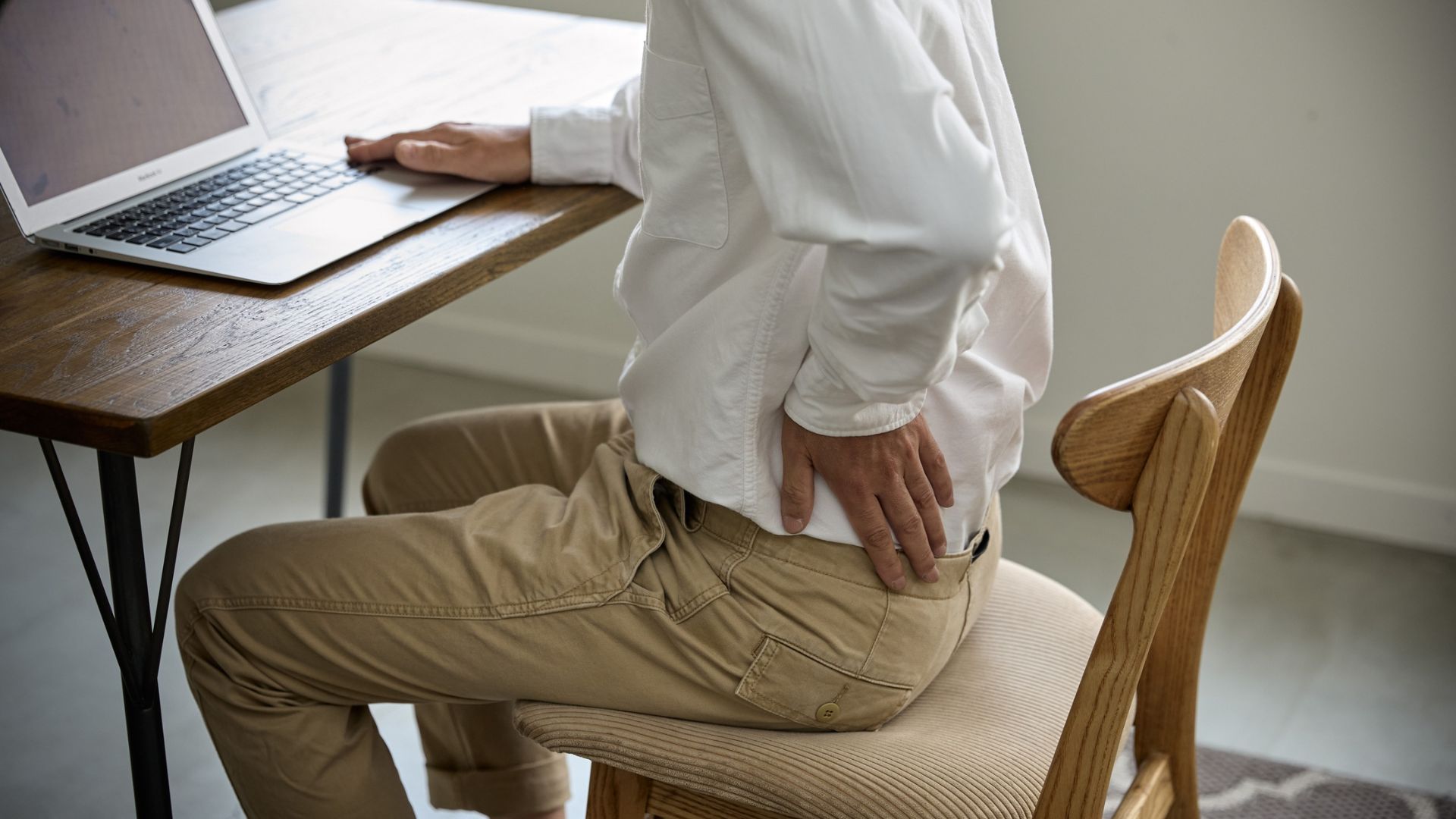
A sharp pain shooting down your leg can make it hard to sit, walk, or sleep comfortably. You may have heard someone call it a “pinched nerve” or “sciatica.” Although the terms are related, they do not mean exactly the same thing. Knowing the difference can help you describe your symptoms and understand why a proper evaluation matters.
The short answer: A pinched nerve is a general term for a nerve irritated or compressed by surrounding tissue. Sciatica describes pain and other symptoms that typically travel from the lower back or buttock into one leg along the sciatic nerve pathway. Sciatica often involves irritation of a nerve root in the lower spine, but the pain pattern alone does not identify the exact cause.
Pinched Nerve vs. Sciatica at a Glance
Meaning: “Pinched nerve” refers broadly to irritation or compression of a nerve; “sciatica” refers to a recognizable set of symptoms along the sciatic nerve pathway.
- Location: A pinched nerve can occur in the neck, lower back, wrist, elbow, or other areas. Sciatica usually affects the buttock and one leg, sometimes extending to the foot.
- Symptoms: Both can cause pain, tingling, numbness, or weakness. Sciatica commonly involves shooting or burning pain down the leg.
- Possible causes: Nerve compression may arise from discs, narrowed spaces, or surrounding tissues. Sciatica is frequently associated with a lumbar disc herniation or spinal stenosis, although other causes are possible.
- Diagnosis: Neither term substitutes for an examination. A clinician considers symptom patterns, strength, reflexes, sensation, and other findings.
What Is a Pinched Nerve?
A pinched nerve occurs when surrounding structures place pressure on, or otherwise irritate, a nerve. Depending on where it happens, symptoms may spread into an arm, hand, buttock, or leg rather than remaining at the site of irritation. Clinicians may use more specific terms, such as cervical radiculopathy for a spinal nerve root problem in the neck or lumbar radiculopathy for one in the lower back.
Common possible contributors include a herniated disc, age-related narrowing around a spinal nerve, or pressure on a peripheral nerve. For example, nerve irritation in the neck can cause symptoms down an arm, while irritation in the lower back may produce symptoms in a leg. Carpal tunnel syndrome is another example of nerve compression, but it is not sciatica.
What Is Sciatica?
Sciatica is the name for symptoms that follow the sciatic nerve pathway. It often feels like a sharp, electric, burning, or shooting pain through the buttock and down the back or side of one leg. Numbness, tingling, or weakness may occur too. Some people have lower back pain, but leg pain can be the more noticeable complaint.
Many cases involve irritation of a spinal nerve root that contributes to the sciatic nerve, often from a herniated lumbar disc or spinal stenosis. The clinical term “lumbar radiculopathy” may be used when examination findings support nerve-root dysfunction. Not every episode of back pain is sciatica, and not all leg pain comes from the spine.
How Can You Tell Which One You Have?
The location and direction of symptoms provide clues, but they cannot confirm a diagnosis on their own. Symptoms limited to the hand or radiating from the neck into an arm point away from sciatica. Pain traveling from the buttock down the leg is more consistent with sciatica, especially when accompanied by tingling or numbness.
Pay attention to when symptoms began, whether pain travels below the knee, whether coughing or certain movements make it worse, and whether you notice weakness or changes in sensation. Hip conditions, muscle problems, and other disorders may mimic sciatic pain, so avoid self-diagnosing based on a single symptom.
What Causes Pinched Nerves and Sciatica?
Herniated disc: Disc material can irritate a nearby spinal nerve root. When that happens in the lower back, it can produce sciatic symptoms.
Spinal stenosis: Narrowing of the spaces around spinal nerves may contribute to pain, numbness, or weakness, sometimes worsening with standing or walking.
Degenerative spinal changes: Age-related changes in discs and joints can sometimes narrow the space available for nerves.
Peripheral nerve compression: Pressure on a nerve outside the spine may cause similar tingling or numbness elsewhere in the body.
The same symptom can have different causes. Treatment decisions should follow the clinical findings rather than assume that every case needs the same type of care.
How Are These Conditions Diagnosed?
An evaluation typically starts with questions about the onset, location, severity, and pattern of pain, along with your medical history and daily activities. A clinician may assess posture and movement, walking, muscle strength, reflexes, and sensation. Certain leg-raising tests can help investigate suspected sciatica.
Imaging is not routinely needed for every new episode of uncomplicated low back or leg pain. MRI or other testing may be recommended when symptoms persist despite appropriate care, severe or progressive neurologic problems are present, or a serious underlying cause is suspected. A clinician may also refer you for medical assessment when symptoms do not fit a straightforward musculoskeletal pattern.
What Treatments May Help?
Treatment depends on the underlying cause, symptom severity, neurological findings, and your goals. Many people with sciatica improve over time with nonsurgical care, but recovery varies and persistent or worsening symptoms deserve reassessment.
Movement and therapeutic exercise
Gentle activity, walking as tolerated, and individualized exercises may help maintain function and reduce disability. Prolonged bed rest is generally discouraged. The right exercises depend on which movements aggravate or relieve symptoms.
Chiropractic and hands-on care
For some patients with uncomplicated musculoskeletal back pain, chiropractic care or other manual approaches may be considered as part of a broader treatment plan. They are not appropriate for every nerve-related condition, and treatment should be modified or deferred if examination findings raise safety concerns. No hands-on method should be presented as guaranteed to release a compressed nerve.
Soft-tissue therapy and rehabilitation
Targeted rehabilitation may address muscle tension, movement tolerance, strength, and activities that provoke discomfort. These strategies support function but do not replace investigation of significant neurological deficits.
Spinal decompression
Elite Chiropractic Rehab & Wellness offers non-surgical spinal decompression as one of its services. Whether it is appropriate depends on the individual examination and medical history. Evidence for machine-based spinal decompression as a specific treatment for sciatica is limited or mixed, so it should not be described as a proven cure or a substitute for urgent medical care.
Medical treatment or specialist referral
Depending on the cause, a medical clinician may discuss pain medication, additional physical therapy, injections, or other options. Surgery is reserved for selected cases, such as certain persistent disabling symptoms or significant nerve dysfunction, and is not necessary for most people with sciatica.
When Should You Seek Medical Attention?
Arrange a timely evaluation if pain radiates into an arm or leg, symptoms persist or interfere with everyday activities, or you notice recurring numbness or tingling. New weakness deserves prompt medical assessment rather than simply continuing the same exercise or treatment routine.
Seek emergency care immediately if you develop new difficulty urinating, loss of bladder or bowel control, numbness around the groin or saddle area, or severe or rapidly worsening weakness, especially in both legs. These can indicate serious nerve compression. Back pain with fever, major trauma, or other concerning systemic symptoms also requires urgent assessment.
What to Expect at Elite Chiropractic Rehab & Wellness in Walnut Creek
At Elite Chiropractic Rehab & Wellness, the team evaluates symptoms, spinal movement, neurological findings, and functional limitations before discussing possible care options. Depending on the findings, recommendations may include chiropractic care, therapeutic exercise, soft-tissue work, or consideration of spinal decompression.
When symptoms suggest a condition beyond appropriate chiropractic care, medical evaluation or referral may be needed.
If you want to learn more before your appointment, explore the clinic’s pinched nerve treatment page (opens in a new tab), spinal decompression therapy page (opens in a new tab), and article about bulging versus herniated discs (opens in a new tab).
Frequently Asked Questions
Is sciatica a type of pinched nerve?
Sciatica can be caused by irritation or compression of a nerve root in the lower spine, which people may call a pinched nerve. However, sciatica names the symptom pattern rather than identifying one confirmed cause.
Can you have a pinched nerve without sciatica?
Yes. A pinched nerve in the neck, wrist, or elbow may affect an arm or hand. Sciatica specifically describes symptoms in the sciatic nerve distribution, usually involving the buttock and leg.
Does sciatica always cause lower back pain?
No. Some people experience prominent leg or buttock pain with little lower back discomfort.
Can a pinched nerve cause numbness and tingling?
Yes. Nerve irritation can affect sensation and sometimes strength. Persistent numbness or any new or progressive weakness should be assessed.
How long does sciatica last?
Many cases improve over several weeks, but symptoms can last months or recur. Duration depends partly on the cause and severity. Seek professional advice if symptoms are not improving or are worsening.
Do I need an MRI for sciatica?
Not always. A history and physical examination are often the first steps. MRI may be appropriate for persistent symptoms, concerning neurological findings, or when the result would change treatment.
Can sitting make sciatica worse?
For some people, prolonged sitting or certain positions aggravate symptoms. Others are more uncomfortable while standing or walking. Your symptom pattern helps guide evaluation and activity modifications.
Is spinal decompression suitable for everyone with sciatica?
No. It is not suitable for every patient, and the evidence of benefit is uncertain. A clinician should first assess the possible cause and whether there are contraindications or warning signs.
Get Clarity About Your Nerve Pain
If pain, tingling, or numbness is disrupting your routine, a thorough evaluation is a better starting point than guessing whether it is a pinched nerve or sciatica. Elite Chiropractic Rehab & Wellness (opens in a new tab) serves Walnut Creek, Pleasant Hill, Concord, Lafayette, and nearby East Bay communities. Call 925-476-5070 or visit https://elitecrw.com/ to request an appointment and discuss next steps.
This article is for general education and does not replace individualized medical advice or emergency evaluation.
Elite Chiropractic Rehab & Wellness
Providing personalized chiropractic care, sports rehabilitation, and spinal decompression services in Walnut Creek, California, and serving patients from Pleasant Hill, Concord, Lafayette, and surrounding East Bay communities.
Call: 925-476-5070 | Website: https://elitecrw.com (opens in a new tab)