
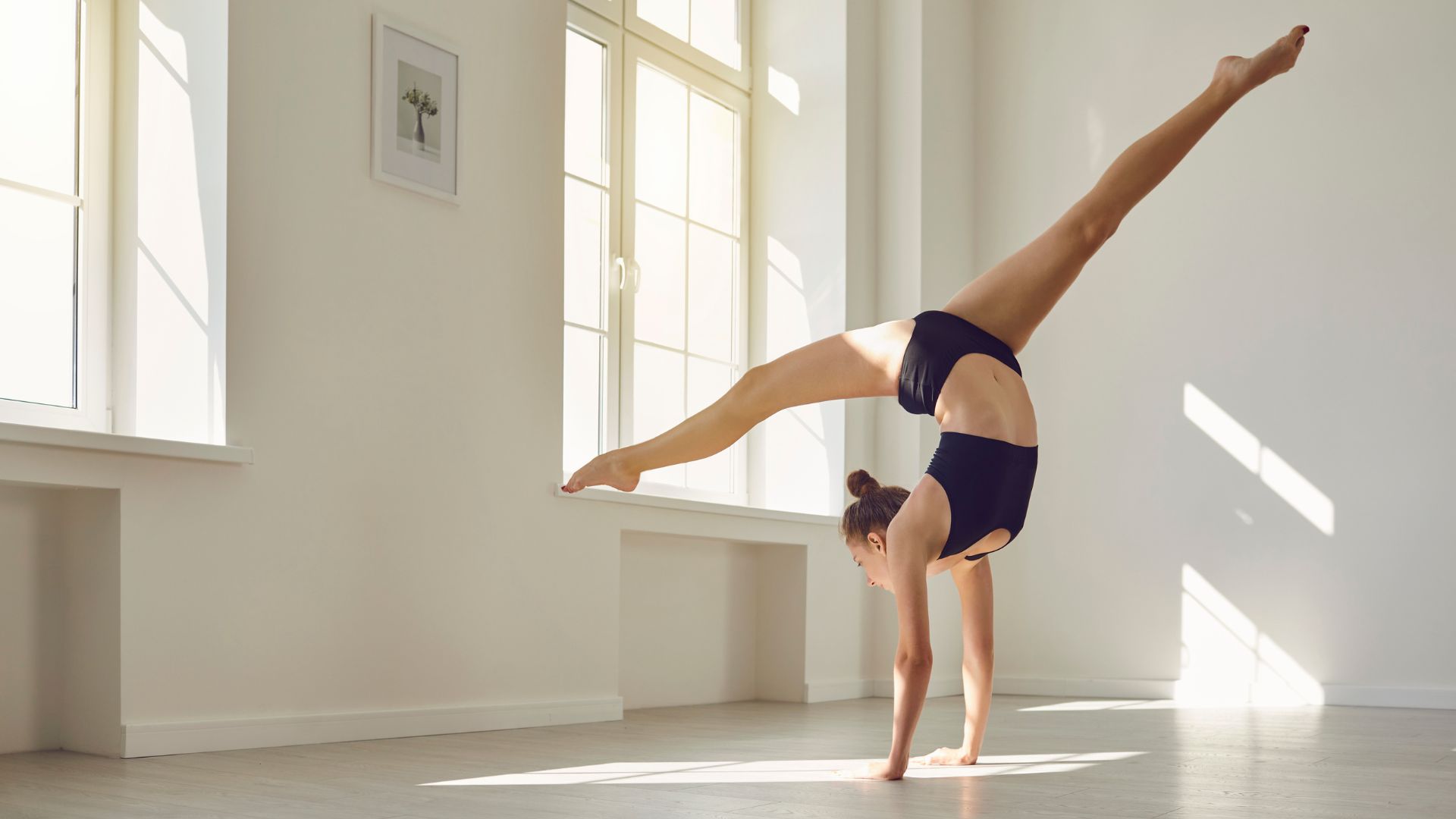
Gymnastics is one of the most demanding sports on the planet. Young athletes are asked to twist, flip, arch, and land with explosive force – sometimes thousands of times a week. So it should come as no surprise that low back pain (opens in a new tab) and gymnastics often go hand in hand, especially in growing bodies that are still developing bone density and joint stability.
If your child is a gymnast experiencing low back pain, you are not alone in trying to figure out what is going on. Is it a muscle strain? Something with the spine? Is it serious? Should they stop training?
This article breaks it all down clearly so you can make informed decisions and help your young gymnast heal the right way.
Why Gymnasts Are at High Risk for Lower Back Pain
The sport of gymnastics demands an extreme range of motion (opens in a new tab), repetitive spinal loading, and high-impact landings – all combined into a single training session. No other sport asks this much of the lumbar spine on a daily basis.
Competing in gymnastics means performing back walkovers, back handsprings, back bends, and vaulting skills that repeatedly compress and extend the spine. Over time, this can cause pain or disability if the body is not recovering properly between sessions.
Both male gymnasts and female gymnasts face this challenge, though research shows a higher prevalence of lower back injuries in gymnasts who specialize at a young age. Adolescent gymnasts are especially vulnerable because their bones are still growing, making the spine more susceptible to stress.
The Role of the Lumbar Spine in Gymnastics Skills
The lumbar spine – or lower back – is the bridge between the upper body and the hips. In gymnastics, nearly every skill passes force through this region. When a gymnast lands from a vault or performs a back walkover, the lumbar vertebrae absorb and transfer enormous mechanical stress.
The facet joints and pars interarticularis (a small section of bone in the vertebra) are especially vulnerable to repetitive loading in extension and rotation. When these structures are overloaded, injury can follow.
Common Types of Lower Back Injuries in Gymnasts
Understanding the types of lower back injuries helps parents, coaches, and clinicians respond appropriately when a gymnast is experiencing low back pain.
Spondylolysis: The Most Common Diagnosis
Spondylolysis, a stress fracture of the pars interarticularis, is the leading cause of low back pain in young gymnasts. A stress fracture in this small piece of bone can develop gradually through repeated back extension and rotation – exactly the movements that define artistic gymnasts’ training.
The signs are often subtle at first. A gymnast may complain of a dull aching pain in the lower back that gets worse after training. Pain with arching the back is one of the most consistent red flags for spondylolysis.
If left unaddressed, spondylolysis can progress to spondylolisthesis, where one vertebra slips forward on another. This leads to more serious pain or disability and a longer road to recovery.
Muscle Strains and Overuse
Not every case of lower back pain in gymnasts involves a stress fracture. Strain of the back muscles, especially the multifidus muscle and the latissimus dorsi muscle, is also common.
These muscles work hard to stabilize the spine during gymnastics training, and when fatigue or poor motor control sets in, they can become overloaded.
Muscle-based injuries often cause a generalized aching pain or stiffness, particularly after long practices or after a rapid increase in training volume.
Disc-Related Pain and Nerve Involvement
While less common in young gymnasts, repeated flexion and extension movements can contribute to disc stress. In some cases, a gymnast’s back has had a chance to develop early degenerative changes due to years of high-load training. This can irritate nearby nerve roots and cause radiating discomfort down the legs.
A former gymnast who trained at a high level for many years may carry these findings into adulthood if proper rehabilitation was never completed.
How to Tell If the Pain Is Serious
One of the hardest parts of back pain in young athletes is knowing when to push through and when to stop. The answer is almost never to simply push through it. Ignoring pain isn’t the answer – especially in a growing spine.
Here are situations where a professional evaluation is essential:
- Pain that lasts more than two weeks despite rest
- Extension pain or pain with arching that is sharp or localized
- Pain that radiates into the legs
- Changes in bladder or bowel function (rare but urgent)
- Pain that disrupts sleep
If a gymnast is experiencing low back pain in any of these patterns, seeking care from a qualified chiropractor or physical therapist is the right next step.
For parents of young gymnasts involved with Encore, Liberty, East Bay Gymnastics, or Ultimate Sports Connection, recurring back pain after practice should not be dismissed as normal soreness, especially when it worsens with arching, tumbling, or landings.
The Role of Physical Therapy and Chiropractic Rehabilitation
Getting a young gymnast back on their feet requires more than rest. Effective management of low back pain in this population involves a structured rehabilitation plan that addresses the root cause – not just the symptoms.
Physical therapy plays a central role in restoring strength, mobility, and body awareness after a back injury. A skilled physical therapist will assess movement patterns, identify weaknesses in core strength (opens in a new tab), and design a program that supports the demands of gymnastics without re-aggravating the spine.
At Elite Chiropractic Rehab & Wellness in Walnut Creek, our team has extensive experience working with gymnasts and young athletes recovering from back injuries. We don’t just treat the area that hurts – we look at how the entire body is moving and contributing to the problem.
Chiropractic Care for the Gymnast’s Spine
Chiropractic care helps restore proper joint mechanics in the lumbar spine and can reduce pain levels during the early stages of recovery. For gymnasts, this often includes addressing restriction not just in the lower back but also in the hips, thoracic spine, and shoulder girdle, since all of these joints contribute to overall gymnastics performance.
By improving range of motion and reducing joint pain, chiropractic care creates the foundation for effective strength training and movement retraining.
Core Strength and Motor Control
One of the most consistent findings in patients with chronic low back pain – including those involved in gymnastics – is poor core stability and disrupted motor control patterns. The deep muscles of the abdomen and spine, including the multifidus, are often inhibited after injury.
Rehabilitation must include progressive core strength work that is appropriate for the gymnast’s current pain levels and healing stage. This is not about doing crunches – it is about teaching the spine to stabilize efficiently under load, which is exactly what the demands of gymnastics require.
Mobility Work and Flexibility Training
It might seem counterintuitive to talk about flexibility when discussing back pain and gymnastics, since gymnasts are already extremely flexible. But mobility – the ability to control movement through a full range of motion – is different from passive flexibility.
Many gymnasts have excessive passive range of motion but poor active control in those end ranges. Rehabilitation must build strength and body awareness in the ranges the gymnast uses for skills such as back walkovers and back handsprings.
Return to Gymnastics: Doing It Right
The return to sport phase is where many young gymnasts run into trouble. Feeling better does not mean the back has fully healed. Returning too early is one of the most common reasons that back pain in gymnastics becomes a chronic problem.
A safe return to gymnastics program should be progressive and criterion-based – meaning the gymnast advances based on what they can do, not how much time has passed. This includes:
- Full resolution of pain with daily activities
- Restored core strength (opens in a new tab) and joint stability
- Pain-free performance of gymnastics skills at a reduced intensity
- Clearance from a qualified clinician
Working with gymnasts through this phase requires close communication between the treating clinician, the gymnastics coach, and the athlete’s family. At Elite Chiropractic Rehab & Wellness, we prioritize this collaboration because we know that a rushed return to sport often leads to re-injury.
Supporting Long-Term Health for Young Gymnasts
Back pain in young athletes does not have to lead to quitting gymnastics. With proper care, most young gymnasts can return to full training and competition – often stronger and more resilient than before.
Low back pain (opens in a new tab) and gymnastics are closely linked, but so are recovery and smart, structured care. The key is catching problems early, not minimizing them, and building gymnastics programs that include adequate recovery time, strength training, and body awareness development.
For families in Walnut Creek whose child is dealing with back or low back pain related to their sport, the team at Elite Chiropractic Rehab & Wellness is here to help. We specialize in sports rehab therapy (opens in a new tab) and work with young athletes every day to help them heal safely, move better, and get back to doing what they love.
You can reach us at 925-476-5070 or visit elitecrw.com (opens in a new tab) to learn more about how we support gymnasts and their families through recovery and back to peak performance.
Frequently Asked Questions
What is the most common cause of lower back pain in gymnasts?
Spondylolysis – a stress fracture of the pars interarticularis in the lumbar spine – is the most common diagnosis in gymnasts with low back pain. It is caused by repeated extension and rotation of the spine during gymnastics skills like back bends and back handsprings.
How long does it take for a gymnast to recover from spondylolysis?
Recovery time varies depending on severity. A partial stress fracture may heal in six to twelve weeks with appropriate management of low back pain and activity modification. A gymnast should not return to gymnastics until they are cleared by a clinician and have completed a structured rehabilitation program.
Should a gymnast stop training completely if they have low back pain?
Not necessarily. A complete break from all activity is rarely the best answer. Instead, working with a chiropractor or physical therapist to modify training and address the underlying cause of pain is typically more effective. The goal is to prevent chronic low back pain, not just provide short-term rest.
Can chiropractic care help a young gymnast with back pain?
Yes. Chiropractic care can help restore joint motion, reduce pain, and support the rehabilitation process. It is most effective when combined with physical therapy, strength training, and a graded return to sport plan.
Conclusion
Low back pain is one of the most common challenges facing young gymnasts today, whether they train with Encore, Liberty, East Bay Gymnastics, Ultimate Sports Connection, or another local gymnastics program, but it does not have to define a young athlete’s career.
With the right diagnosis, a thoughtful rehabilitation plan, and expert guidance, most gymnasts can return to training safely and confidently. If your child is experiencing back pain related to their sport, do not wait for it to become a bigger problem. Reach out to the team at Elite Chiropractic Rehab & Wellness in Walnut Creek (opens in a new tab) at 925-476-5070 – because getting the right help early makes all the difference.