If you’ve been dealing with chronic back pain, a herniated disc, or sciatica, you’ve probably come across the term “spinal decompression therapy.” And if you’re like most people, your first question is a fair one: is this actually safe, or is it just another wellness trend dressed up in medical-sounding language?
That skepticism is healthy. Let’s break it down honestly.
What Is Spinal Decompression Therapy, Really?
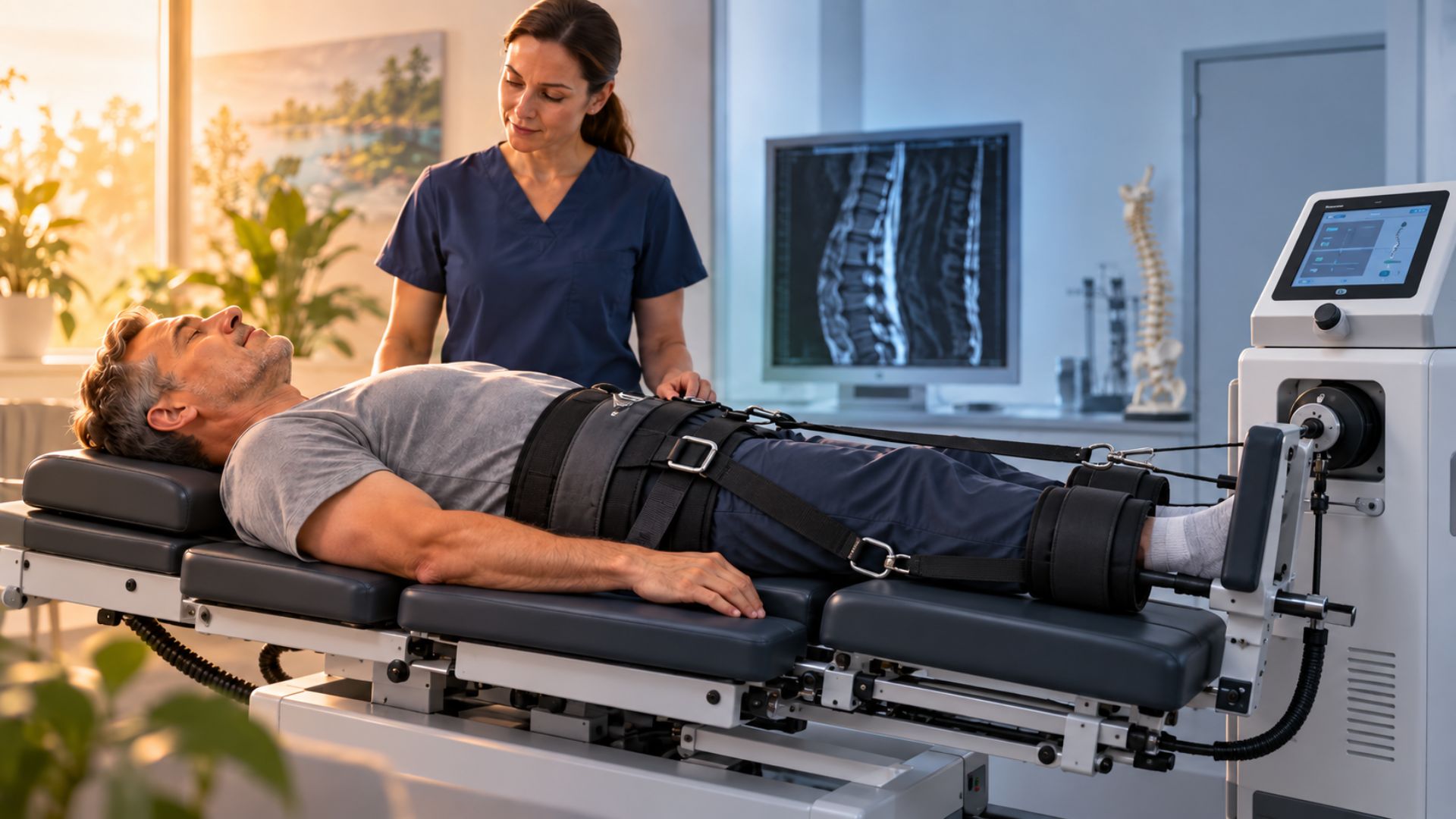
Spinal decompression is a form of motorized traction applied to the spinal column. The goal is to gently stretch the spine, creating negative pressure within the intervertebral disc. This change in pressure can help retract or reposition a bulging or herniated disc, taking stress off compressed nerve roots and promoting better circulation to the area.
Think of it like releasing a squished sponge – the disc gets a chance to rehydrate and heal. It is not a cracking or manipulation technique. It is slow, controlled, and targeted.
There are two main types: surgical decompression, such as spinal fusion or corpectomy, and non-surgical decompression therapy performed in a chiropractic or physical therapy setting. When most patients and health care providers refer to “spinal decompression therapy,” they are talking about the non-surgical version.
Is Non-Surgical Spinal Decompression Actually Safe?
Here is what the research and clinical experience actually show.
What the Scientific Literature Says
Multiple systematic reviews and randomized controlled trials have examined non-surgical spinal decompression. The consensus in the scientific literature is that it is generally safe for appropriately selected patients. Studies published in journals focused on pain management and sports medicine have found meaningful reductions in low back pain and improved quality of life for patients with disc herniation and spinal stenosis.
Organizations acknowledge non-surgical decompression as a legitimate option for certain spinal conditions, particularly when conservative care like exercise and transcutaneous electrical nerve stimulation (TENS) has not provided adequate relief.
That said, efficacy varies. It is not a one-size-fits-all solution, and the therapy works best when it is part of a structured, evidence-based treatment plan.
Who Is It Not Safe For?
Honesty matters here. Spinal decompression is not appropriate for everyone (opens in a new tab). Health care providers typically screen patients carefully before recommending this therapy. It is generally not recommended for people who are:
- Pregnant
- Diagnosed with a bone fracture or severe osteoporosis
- Dealing with a spinal tumor or infection
- At risk of bleeding or known thrombus (blood clot) conditions
- Post-surgical with spinal hardware such as implants from orthopedic surgery or spinal fusion
If you have significant osteophytes (bone spurs), advanced spinal canal narrowing, or certain nerve conditions identified through medical imaging such as magnetic resonance imaging (MRI) or electromyography, your provider may explore other options first.
This is why a thorough intake and screening process is not optional – it is essential.
Why Some People Call It “Overhyped”
The skepticism around spinal decompression is understandable, and some of it is warranted.
The Problem With Advertising
Some clinics have leaned heavily into advertising spinal decompression as a miracle solution for nearly every type of back pain, sciatica, or nerve root compression. That kind of marketing oversimplifies a nuanced therapy. The reality is that not every patient responds the same way, and clinical trials show a range of outcomes.
Some patients arrive with unrealistic expectations shaped more by advertising than by actual research. When the therapy does not produce dramatic results for everyone, it fuels the perception that it does not work at all.
When Decompression Alone Is Not Enough
Spinal decompression therapy is most effective when it is combined with other approaches. Muscle re-education, targeted exercise, soft tissue work, and neuromodulation techniques all play a role in lasting recovery from conditions like disc herniation or low back pain.
Treating spinal decompression as a standalone fix, rather than one tool in a broader treatment plan, is where some decompression practices fall short – and where patient disappointment tends to originate.
What a Real, Well-Managed Treatment Plan Looks Like
At Elite Chiropractic Rehab & Wellness (opens in a new tab) in Walnut Creek, spinal decompression therapy (opens in a new tab) is never applied in isolation. Dr. Ben Rosenstein and Dr. Tony Cresci take a comprehensive approach, combining decompression with chiropractic care, sports rehab therapy, and other evidence-based techniques tailored to the individual patient.
The intake process involves a thorough review of signs and symptoms, injury history, and relevant medical imaging. This is not a “lay down and hope for the best” approach – it is structured, progressive care with clear goals.
For patients dealing with chronic back pain, sciatica, or spinal stenosis who want to avoid minimally invasive surgeries or more aggressive orthopedic interventions, this kind of methodical approach can be genuinely life-changing.
Side Effects: What to Expect
Most patients tolerate non-surgical spinal decompression very well. Some people experience mild soreness in the muscles along the back following early sessions, similar to how the body responds after exercise or a deep tissue massage. Serious side effects are rare when proper screening is in place.
Decompression sickness – a term most commonly associated with diving medicine – is not a concern with this type of therapy. The risk profile for non-surgical spinal decompression is significantly lower than that of surgery and avoids some of the risks associated with long-term analgesic use or inactivity.
How Does It Compare to Other Non-Surgical Options?
Patients often ask how spinal decompression compares to other conservative treatments like acupuncture, inversion therapy, cold laser therapy, or physical therapy.
Each has its place. Inversion therapy, for example, uses gravity to create mild traction but lacks the precision and control of a motorized decompression table. Acupuncture addresses nerve pain and inflammation through different mechanisms entirely. Cold laser therapy promotes tissue healing at the cellular level and pairs very well with decompression in a clinical setting.
The point is not which therapy “wins” – the point is which combination of therapies best addresses your specific condition, your health history, and your goals.
Is Spinal Decompression Safe as Part of Your Treatment Plan?
Spinal decompression therapy is neither a miracle cure nor empty hype. When applied correctly by trained health care providers to properly screened patients, it is a safe, evidence-supported option for conditions like disc herniation, spinal stenosis, and chronic low back pain. The key is receiving it within a structured, personalized treatment plan – not as a standalone promise.
If you are exploring non-surgical options for back or nerve pain, learn more about how Spinal Decompression Therapy (opens in a new tab) at Elite Chiropractic Rehab & Wellness can be part of your recovery, or call 925-476-5070 to schedule a consultation (opens in a new tab).