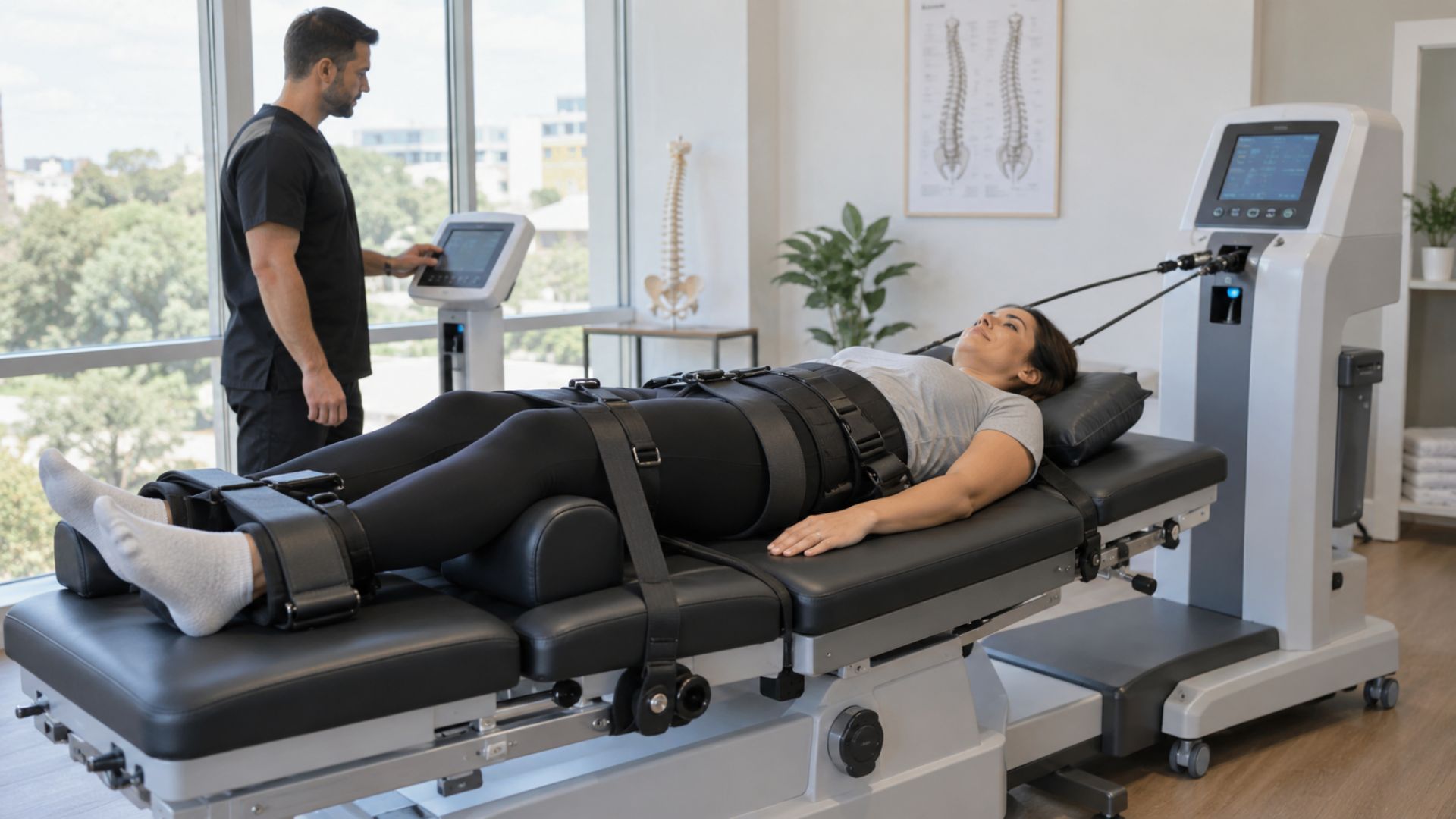
It’s one of the most common questions people ask after their first experience with spinal decompression therapy: Can this last forever? The honest answer is more nuanced than a simple yes or no, and understanding the difference between lasting relief and permanent structural change can actually help you get better, longer-lasting results.
Let’s break it down clearly.
What Spinal Decompression Actually Does
Your spine is under constant pressure. Sitting at a desk, driving, lifting, even just standing – gravity compresses your vertebrae throughout the day. Over time, this compression can cause spinal discs to bulge, herniate, or degenerate, leading to pain, stiffness, and conditions like sciatica or radiculopathy.
Spinal decompression therapy works by gently stretching the spine using a specialized table. This creates negative pressure inside the disc, which can pull herniated or bulging material back toward its proper position and encourage nutrient-rich fluid to flow back in. Think of it like rehydrating a dried-out sponge.
The relief many patients feel is real, measurable, and supported by clinical evidence. But the spine is also a living structure that continues to respond to how you move, sit, sleep, and load it every single day.
So, Is Spinal Decompression Permanent?
Here’s where it gets important to be honest with you: spinal decompression is not a one-time fix that permanently restructures your spine. No therapy, surgical or otherwise, can completely reverse years of disc degeneration or guarantee that compression will never return.
What spinal decompression can do is create a meaningful window of healing, and if you take advantage of that window with the right habits and follow-up care, the results can last for a very long time.
Research suggests that patients who complete a full course of spinal decompression therapy and commit to supportive lifestyle changes often experience sustained relief that extends well beyond their treatment period. For some, that means months or even years of reduced pain.
What Determines How Long Relief Lasts?
The longevity of your results depends on several interconnected factors. It’s not just about how many sessions you complete – it’s about what happens between and after those sessions.
The Severity of Your Condition
Someone with mild disc bulging and no structural damage will typically experience more durable results than someone managing advanced disc degeneration or significant structural narrowing. That’s not a reason to avoid treatment – it’s a reason to start sooner rather than later.
Your Daily Habits and Posture
This one matters more than most people realize. If you return to the exact postures and movement patterns that contributed to your spinal compression in the first place, you’re essentially undoing the progress made during treatment. Poor sitting posture, heavy lifting without proper mechanics, and prolonged inactivity all accelerate disc re-compression.
Complementary Care and Rehabilitation
Spinal decompression works best as part of a broader treatment plan. When combined with chiropractic adjustments, targeted rehabilitation exercises, and soft tissue therapies like myofascial release or massage, the spine becomes more stable, mobile, and resilient. You’re not just creating temporary relief – you’re building a stronger foundation.
Consistency of Maintenance Care
Many patients benefit from periodic maintenance sessions even after completing their primary treatment plan. Much like how you’d service a car to prevent breakdowns, occasional decompression sessions help maintain the gains you’ve worked hard to achieve.
What the Research Says About Long-Term Outcomes
A study published in the Journal of Neuroimaging (opens in a new tab) found that non-surgical spinal decompression led to significant reductions in pain and disc herniation size, with improvements maintained at follow-up. While individual results vary, the data supports the idea that this therapy can produce real, lasting changes when applied correctly.
The key phrase there is when applied correctly. A rushed or incomplete treatment course, followed by no lifestyle adjustment, is unlikely to produce the same durable outcomes as a well-structured, patient-centered plan.
The Realistic Goal: Long-Term Management, Not a One-Time Cure
It helps to reframe the question slightly. Instead of asking “Can I decompress my spine permanently?” it may be more useful to ask, “Can I manage my spinal health in a way that keeps me pain-free long-term?”
The answer to that question is a confident yes – for most people.
When patients commit to a comprehensive approach that includes professional decompression therapy, corrective exercise, postural awareness, and consistent follow-through, many do achieve long periods of genuine relief. Some reach a point where they rarely need intervention at all.
That’s not a gimmick. That’s what good spinal health management actually looks like.
How Elite Chiropractic Rehab & Wellness Approaches This
At Elite Chiropractic Rehab & Wellness in Walnut Creek, California, Dr. Ben Rosenstein and Dr. Tony Cresci take a structured, individualized approach to spinal decompression. They don’t just run patients through a standard session count and send them home. Instead, the goal is to understand what’s driving your compression, address it from multiple angles, and give you the tools to maintain your results.
That might mean pairing decompression therapy with sports rehab, cold laser therapy, or myofascial release, depending on what your spine actually needs. The emphasis is always on long-term function, not just short-term pain relief.
If you’re curious about what a full course of treatment actually involves, the Spinal Decompression Therapy Overview (opens in a new tab) on our site walks through exactly how the process works and what to expect.
Practical Steps to Extend Your Results
While no single action guarantees permanent decompression, these habits consistently support longer-lasting outcomes:
- Strengthen your core. A stronger core takes pressure off the spine and supports better disc alignment.
- Improve your sitting posture. Most spinal compression happens gradually through hours of poor positioning at a desk or behind the wheel.
- Move more throughout the day. Even short walks or standing breaks reduce cumulative disc pressure.
- Sleep with spinal support in mind. Side sleeping with a pillow between the knees or back sleeping with support under the knees reduces overnight compression.
- Stay consistent with follow-up care. Periodic check-ins with your chiropractor help catch small problems before they become big ones.
Can Spinal Decompression Last Long-Term?
Can you decompress your spine permanently? Not in the way a machine gets permanently repaired. But can you achieve long-term, meaningful relief through a smart, consistent approach to spinal health? Absolutely.
Spinal decompression therapy opens the door. What you do with that opening, the rehab, the lifestyle changes, the maintenance care, determines how long that door stays open.
If you’re dealing with back pain, disc issues, or sciatica and you’re ready to take a proactive approach, call Elite Chiropractic Rehab & Wellness (opens in a new tab) at 925-476-5070 to schedule a consultation (opens in a new tab). The team in Walnut Creek is ready to help you build a plan that goes beyond temporary relief and gets you moving toward lasting results.