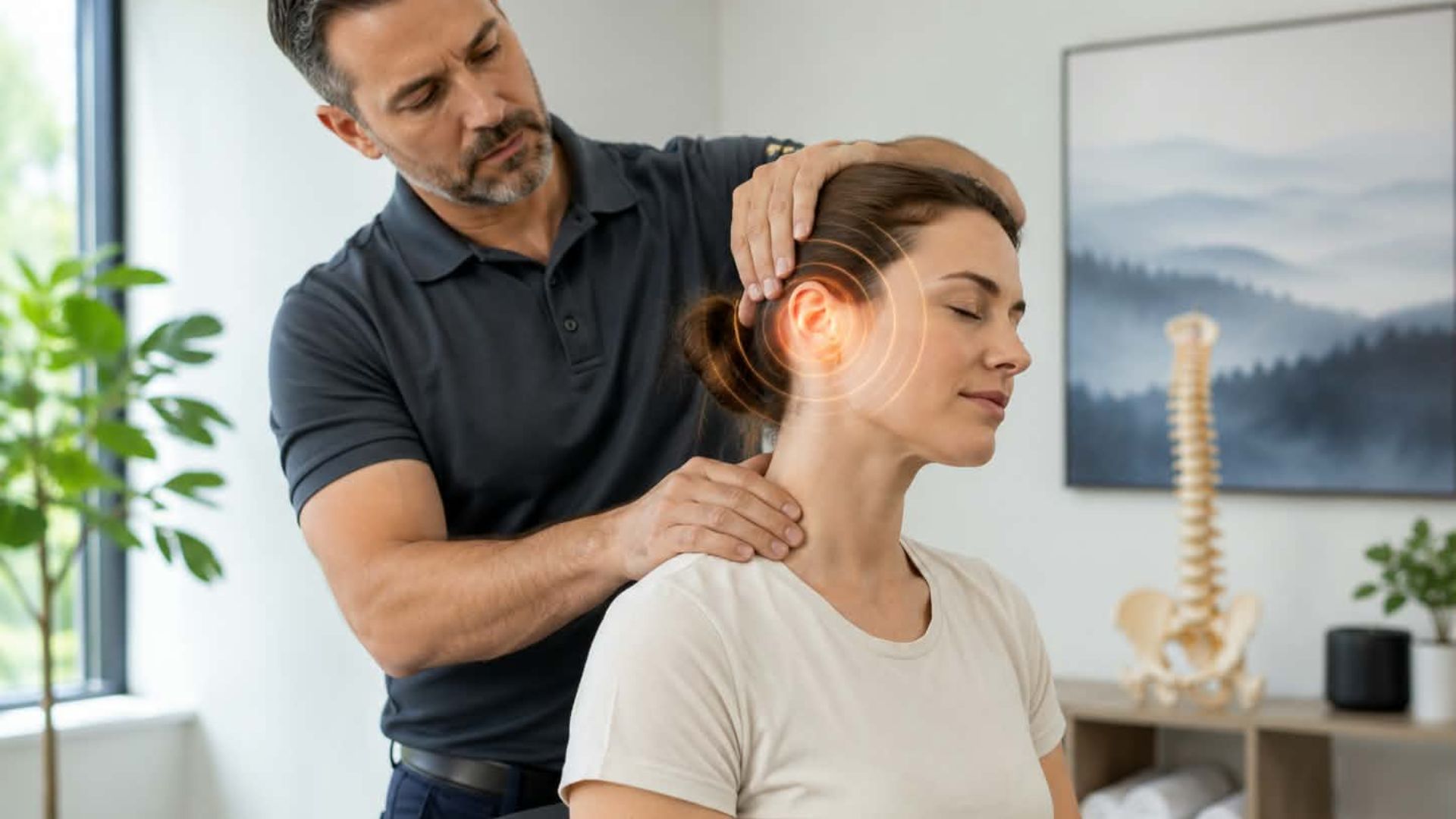
That persistent ringing, buzzing, or hissing in your ears is hard to ignore. If you’ve been living with tinnitus, you already know how much it can disrupt your sleep, your focus, and your overall quality of life. But here’s something most people don’t consider: the answer to some cases of tinnitus might not start in your ear at all – it might start in your spine.
Chiropractic care isn’t typically the first thing that comes to mind when you think about hearing problems. But once you understand the nerve connection between your cervical spine and your auditory system, it starts to make a lot of sense.
What Is Tinnitus, and Why Is It So Hard to Treat?
Tinnitus is the perception of sound – ringing, buzzing, clicking, or hissing – when no external noise is actually present. It’s not a disease on its own, but rather a sign or symptom of something happening elsewhere in the body.
For some people, tinnitus is mild and occasional. For others, it’s a chronic condition that causes significant anxiety, sleep disruption, and even major depressive disorder over time. Because tinnitus has many potential causes, it can be frustratingly difficult to treat.
Common causes identified in audiology and otorhinolaryngology include hearing loss, earwax buildup, otitis media, hypertension, Meniere’s disease, and injuries to the head and neck. That last one – head and neck injury – is where chiropractic treatment techniques (opens in a new tab) become particularly relevant.
The Nerve Connection Most People Miss
Your central nervous system is essentially the communication highway for your entire body. Your spinal cord runs through the spinal column, and the cervical vertebrae at the top of your spine sit just below your skull – incredibly close to the structures that control hearing, balance, and blood flow to the brain.
When there’s a misalignment, tension, or nerve compression in the cervical spine, it can interfere with the normal action potential of nearby nerves. This disruption can affect the auditory system in ways that produce or worsen tinnitus.
Think of it this way: the nerves in your neck don’t just control movement and sensation in your arms and shoulders. They’re part of a complex web that influences everything from your inner ear to your cochlea to the way your brain processes sound.
How Cervical Spine Dysfunction Can Trigger Tinnitus
The upper cervical vertebrae, particularly the atlas (C1) and axis (C2), have a direct relationship with blood flow and nerve signaling to the head. When these vertebrae are out of alignment, they can create irritation or pressure that travels along neural pathways connected to the ear.
This is sometimes referred to as cervicogenic tinnitus – a form of tinnitus that originates from dysfunction in the cervical spine rather than from a primary auditory or neurological condition.
Research in neurology and physical therapy has increasingly recognized this connection, particularly in patients whose tinnitus began after a whiplash injury or accident.
Muscle tone in the neck also plays a role. Tight, inflamed muscles surrounding the cervical spine can restrict circulation and place pressure on nearby nerves, amplifying that unwanted noise in the ear.
Other Structural Contributors to Tinnitus
It’s not just the neck. Tinnitus can also be influenced by other musculoskeletal structures that a chiropractor is trained to evaluate.
- Temporomandibular joint dysfunction – commonly called TMJ – is a well-documented contributor to tinnitus. The temporomandibular joint sits just in front of the ear canal, and when it’s inflamed or misaligned, it can directly affect hearing perception and inner ear function. Jaw tension and clenching can compound this further, especially in patients dealing with psychological stress or anxiety.
- The circulatory system also plays a meaningful role. Poor hemodynamics or restricted blood flow in the neck region can affect blood flow to the cochlea and inner ear, sometimes triggering or intensifying tinnitus symptoms.
What Chiropractic Care Can Actually Do
Let’s be clear: chiropractic is not a cure for all types of tinnitus. A proper medical diagnosis from an audiologist or ENT physician is essential, especially to rule out conditions like Meniere’s disease, serious hearing loss, or vascular disease.
That said, for patients whose tinnitus is connected to cervical spine disorder, nerve compression syndrome, or musculoskeletal dysfunction, chiropractic treatment techniques (opens in a new tab) can offer meaningful relief.
Spinal Adjustment and Cervical Alignment
A spinal adjustment targeting the cervical vertebrae can relieve pressure on irritated nerves and restore normal joint motion. When the vertebra returns to proper alignment, the nervous system – including pathways connected to the auditory system – can communicate more effectively.
Patients who experience tinnitus alongside neck pain (opens in a new tab), headaches, or vertigo may be especially good candidates for this approach. The physical examination performed at a chiropractic clinic helps identify whether cervical spine dysfunction is a contributing factor.
Soft Tissue Therapy and Relaxation Techniques
At Elite Chiropractic Rehab and Wellness, care extends beyond the spinal adjustment. Massage therapy and myofascial release can reduce muscle tension in the jaw, neck, and shoulder region – areas that commonly contribute to tinnitus through inflammation and nerve irritation.
These relaxation techniques help calm the nervous system, reduce psychological stress, and improve circulation, all of which support the body’s natural ability to regulate sound perception.
Cold Laser Therapy
Cold laser therapy – also called red light therapy – is another tool that may support tinnitus relief by reducing inflammation in tissues surrounding the ear and cervical spine. It’s a non-invasive option that complements spinal care and soft tissue therapy as part of a comprehensive treatment plan.
Signs That Your Tinnitus Might Have a Spinal or Structural Cause
Not all tinnitus is the same, and not every case will respond to chiropractic care. Here are some indicators that a structural or nerve-related cause may be involved:
- Your tinnitus started after a car accident, a fall, or a neck injury
- You experience neck pain, stiffness, or reduced range of motion alongside the ringing
- You notice that certain head or neck positions make the noise worse or better
- You also deal with headaches, jaw pain, or temporomandibular joint dysfunction
- The tinnitus is accompanied by dizziness or vertigo
If any of these patterns sound familiar, it’s worth having your cervical spine evaluated as part of your overall health care approach.
Frequently Asked Questions
Can a chiropractor actually stop tinnitus?
In some cases, yes – particularly when tinnitus is caused by cervical spine dysfunction, nerve compression, or TMJ issues. Chiropractic isn’t a universal cure, but for the right patient, it can significantly reduce or eliminate symptoms.
How many chiropractic sessions does tinnitus relief take?
This depends on the severity of the underlying dysfunction. Some patients notice improvement after just a few spinal adjustments, while chronic conditions may require a longer course of care. Your chiropractor will assess your specific situation and create a personalized plan.
Should I see an audiologist before a chiropractor?
Ideally, yes – especially if your tinnitus is new or severe. A proper evaluation in audiology or otorhinolaryngology helps rule out serious conditions. After that, chiropractic can work alongside or complement conventional medical care.
Is chiropractic care safe for tinnitus patients?
For most patients, chiropractic care – especially upper cervical adjustments – is a safe and non-invasive therapy. Your chiropractor will review your health history and perform a thorough physical examination before recommending any treatment.
Can a Chiropractor Help With Tinnitus? When to Get Evaluated
Tinnitus is complex, but the connection between your cervical spine, nervous system, and auditory health is real and increasingly supported by research. If you’ve tried medication or other approaches without lasting results, a chiropractic evaluation may reveal the structural root of the problem. At Elite Chiropractic Rehab and Wellness (opens in a new tab), the team takes a thorough, personalized approach to pain management and nervous system health. To learn more about how spinal care can help, explore our chiropractic care services (opens in a new tab) or call us at 925-476-5070 to schedule an evaluation (opens in a new tab).