
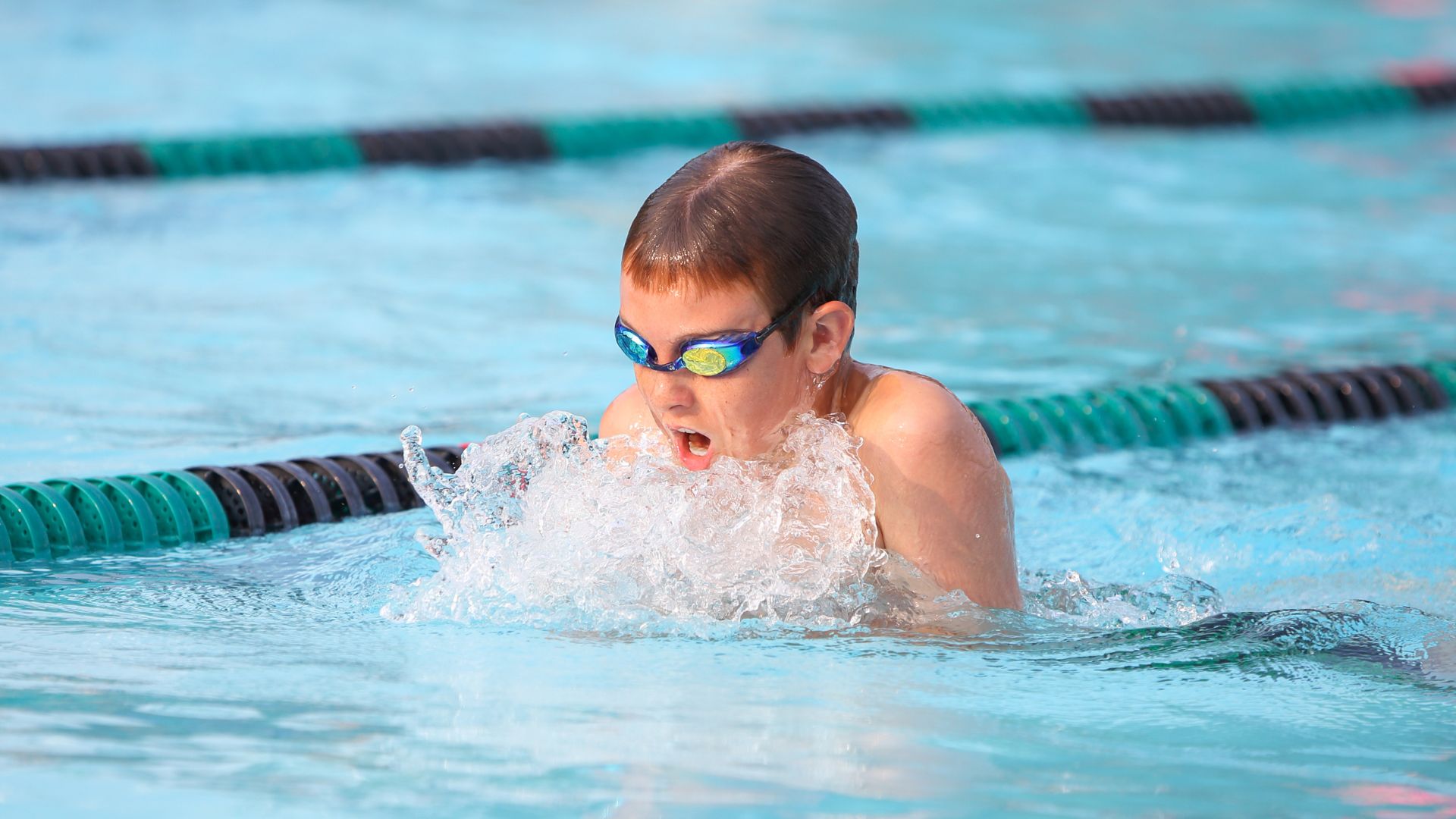
If your young swimmer is coming out of the pool limping or rubbing their knee after practice (opens in a new tab), you are not alone, especially during busy training seasons with local teams like Larkey Sharks, Pleasant Hill Aquatics (Penguins), Ygnacio Wood Swim Club, Rancho San Miguel Swim Club, Indian Valley Swim Club, Scottsdale Swim Club, Rudgear Estates Swim Club, and Buena Vista Swim Club.
Breaststroke knee pain is one of the most common complaints seen in competitive swimming, and it tends to hit younger athletes especially hard. Understanding what is happening inside the knee – and why – is the first step toward keeping your swimmer in the water.
What Is Breaststroke Knee and Why Does It Happen?
Breaststroker’s knee is the informal name for medial knee pain caused by the repetitive stress of the whip kick. Unlike freestyle, where the legs move in a straight, controlled flutter, the breaststroke kick demands a wide, outward sweep followed by a powerful snap of the lower leg.
That motion puts a significant load on the inside structures of the knee.
The medial collateral ligament, or MCL, is the tissue that takes the most punishment. The MCL runs along the inner side of the knee, and during the breaststroke kick, it is repeatedly stretched and compressed. Over time, that repetitive strain leads to tenderness, swelling, and a sharp pain in the knee that makes each kick feel worse than the last.
Patellofemoral stress is another factor. The patella, or kneecap, glides along a groove in the femur during knee flexion and extension. When the kick technique is off or the hip rotation is limited, the patella tracks unevenly, creating friction, pain, and inflammation in the joint.
The Role of Hip Mechanics in Breaststroke Knee Injuries
Here is something many coaches and parents miss: a lot of breaststroke knee problems actually start at the hip, not the knee.
During the whip kick, the hip joint needs adequate external rotation to allow the lower leg and foot to sweep outward properly. When a swimmer has limited hip mobility – often tied to a tight piriformis muscle or weak gluteal muscles – the knee is forced to compensate. Tibial rotation and the mechanics of the propulsion phase of the kick become distorted, causing the medial side of the knee to repeatedly absorb forces it wasn’t designed to handle.
A physiotherapist or sports rehab specialist can assess hip abduction and rotation range and determine whether limited hip mobility is driving the problem. This is a key part of differential diagnosis when a competitive swimmer (opens in a new tab) presents with persistent medial knee pain.
Warning Signs Every Swim Team Parent Should Know
Not every sore knee is a serious ligament injury, but some patterns deserve attention. Watch for:
- Tenderness directly on the medial side of the knee, particularly along the collateral ligament
- Pain that worsens as breaststroke training progresses through a session
- A feeling of instability or giving way in the knee joint
- Swelling that develops after training sessions and does not resolve overnight
- Palpation sensitivity along the shin or just below the knee on the inner side
If these signs appear, reduce training volume immediately and consult a professional before the condition worsens.
Smart Prevention Strategies for Breaststroke Swimmers
Prevention is far easier than rehabilitation. For breaststroke specialists and breaststrokers of all ages, a preventative approach should include these habits.
A proper warm-up is non-negotiable. Mobility work targeting the hip muscles, knee flexors, and ankle joints prepares the body for the demands of competitive swimming. Dynamic drills, including leg swings and a controlled lunge sequence, are far more effective than static stretching before a session.
Dryland training matters just as much as pool time. Strength training focused on the gluteal muscles, hip rotators, and the mobility and strength (opens in a new tab) that support the knee helps distribute load more evenly during the whip kick. A swimmer’s knee is only as stable as the muscles around it.
Fin use during drill sets can help reinforce correct kick technique without placing excessive stress on the knee. Work with coaches to identify any technical flaws – particularly those involving less internal rotation at the hip or a late snap in the kick – and correct them before they become habits.
How Physiotherapy and Chiropractic Care Support Recovery
When knee injuries do occur, getting the right care early makes a significant difference. Physiotherapy and sports-focused chiropractic care (opens in a new tab) address the full picture – not just the pain site, but the biomechanics driving the problem.
Treatment for a competitive swimmer with breaststroke knee might include soft tissue therapy, myofascial release to address piriformis and hip-rotator tightness, dry needling for localized pain relief, and taping or a knee brace for short-term support during return-to-swim. A physiotherapist may also prescribe targeted exercises to rebuild mobility and strength across the hip joint, knee, and surrounding musculature.
Ignoring pain and inflammation rarely works out. Conditions left untreated can progress toward more serious outcomes, including patellofemoral osteoarthritis or chronic MCL damage.
Physical therapy paired with chiropractic rehabilitation gives young swimmers the best chance at a full and lasting recovery.
Conclusion
Breaststroke knee pain does not have to end a young swimmer’s season, whether they swim with Larkey Sharks, Pleasant Hill Aquatics (Penguins), Ygnacio Wood Swim Club, Rancho San Miguel Swim Club, Indian Valley Swim Club, Scottsdale Swim Club, Rudgear Estates Swim Club, Buena Vista Swim Club, or another nearby team.
The key is catching it early, understanding the root cause, and working with professionals who specialize in athletic recovery. At Elite Chiropractic Rehab and Wellness in Walnut Creek, Dr. Ben Rosenstein and Dr. Tony Cresci work with swimmers and active patients to restore function and keep them moving. Call (opens in a new tab) 925-476-5070 or visit elitecrw.com (opens in a new tab) to schedule your evaluation today.