If you have been living with back pain for longer than you care to admit, you have probably heard a lot of advice. Stretch more. Take ibuprofen. See a specialist. Maybe even consider surgery. But somewhere between doing nothing and going under the knife, there is a middle ground that many people in the Bay Area are only now discovering, and it is changing how they think about spinal health.
Spinal decompression therapy is not a new concept, but it is one that is often misunderstood or overlooked. At Elite Chiropractic Rehab & Wellness in Walnut Creek, California, it has become one of the most trusted non-surgical treatments for patients dealing with everything from herniated discs to chronic lower back pain. And for good reason.
This article breaks down exactly what decompression therapy does for your spine, using clear, plain language to help you understand whether it may be right for you.
What Is Spinal Decompression Therapy, Exactly?
Before diving into the benefits, it helps to understand what is actually happening during a session.
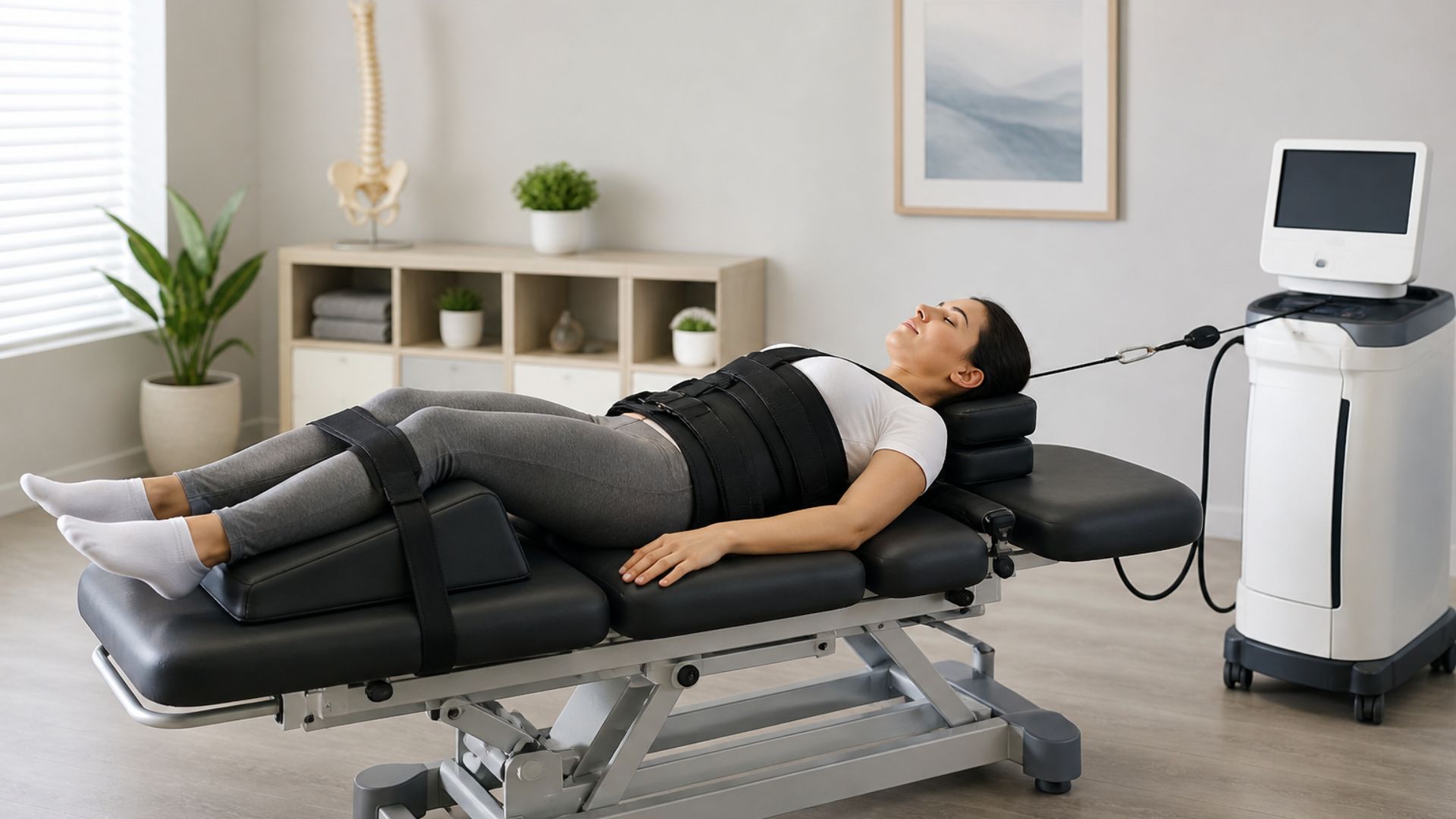
Spinal decompression therapy is a traction-based treatment that gently stretches the spine using a motorized table. The goal is to create negative pressure inside the spinal discs, the gel-like cushions between each vertebra. When that pressure is reduced, compressed or herniated discs may retract, and the spine can begin to heal more naturally.
Think of your spinal discs like a sponge. When they are compressed and dried out from years of sitting, poor posture, or injury, they cannot absorb nutrients or fluid effectively. Decompression creates space, which allows nutrient-rich fluid to move back in, promoting healing and reducing pain.
It is non-invasive, FDA-cleared, and for the right candidates, highly effective. If you want a more detailed look at how the process actually works, this guide on understanding spinal decompression therapy (opens in a new tab) walks through the mechanics in plain language.
7 Ways Decompression Therapy Can Help Your Spine
It Relieves Pressure on Compressed Spinal Discs
This is the most direct and fundamental benefit. When vertebrae compress the discs between them, whether from age, injury, or prolonged poor posture, the pressure can become unbearable. Nerves get pinched, pain radiates, and simple movements feel impossible.
Decompression therapy works by gently pulling the spine in opposite directions, creating a vacuum effect that reduces the compression. Over time, repeated sessions help restore the disc’s natural height and relieve the mechanical pressure that has been driving your pain.
For patients dealing with bulging or herniated discs, this can be a meaningful part of a conservative treatment plan.
Reducing disc pressure does not just ease pain. It may also help address one of the underlying causes of it.
It Helps Heal Herniated and Bulging Discs
A herniated disc happens when the soft inner material of a spinal disc pushes through the tougher outer layer, often pressing on nearby nerves. It is one of the leading causes of debilitating back and leg pain, and it is far more common than most people realize.
Surgery is sometimes presented as the only option, but that is not always the case. Spinal decompression creates the conditions for the disc to retract and rehydrate. The negative intradiscal pressure, the vacuum effect mentioned above, can draw the herniated material back toward the center, reducing nerve compression without ever making a single incision.
This is not a guaranteed fix for every patient, and severity matters. But for many people, consistent decompression therapy may help them delay or avoid surgery when clinically appropriate.
It Reduces Sciatica Pain Significantly
Sciatica is one of the most frustrating conditions to live with. The pain starts in the lower back and travels down the leg, sometimes all the way to the foot, following the path of the sciatic nerve. It can feel like burning, stabbing, tingling, or a deep ache, and it rarely lets up on its own.
The sciatic nerve is often irritated because something is pressing against it, usually a herniated disc, a bone spur, or a narrowed spinal canal. Because decompression therapy targets the structural causes of that compression, it frequently brings meaningful relief to patients with sciatica.
Many patients at Elite Chiropractic Rehab & Wellness (opens in a new tab) report a noticeable reduction in leg pain and numbness after just a few sessions, though full results typically develop over a consistent course of treatment.
It Improves Circulation and Nutrient Flow to Damaged Discs
Spinal discs do not have their own direct blood supply. They depend on the surrounding tissues to deliver oxygen and nutrients through movement and pressure changes. When the spine is chronically compressed or immobile, that exchange slows down, and the discs may begin to deteriorate.
This is one of the reasons why spinal degeneration tends to accelerate with sedentary lifestyles or desk jobs. The discs simply are not getting what they need to repair themselves.
Decompression therapy changes that dynamic. By rhythmically alternating tension and release along the spine, it pumps fluid movement through the disc tissue, encouraging cellular repair and reducing the inflammatory environment that drives chronic pain.
This is why decompression is not just about pain relief; it is about giving your spine the biological tools it needs to heal.
It Supports Recovery from Degenerative Disc Disease
Degenerative disc disease is a condition where the discs between vertebrae gradually break down over time. It is a natural part of aging for some people, but it can be accelerated by injury, repetitive stress, or certain lifestyle factors. Once the disc height decreases and the tissue begins to dry out, pain, stiffness, and reduced mobility often follow.
While no therapy can reverse years of degeneration overnight, spinal decompression has been shown to slow progression and manage symptoms effectively. By improving disc hydration and reducing mechanical stress on vulnerable segments of the spine, patients can often regain functional movement and live with significantly less pain.
At ECRW, decompression is often paired with chiropractic adjustments and rehabilitative exercises to create a comprehensive approach, addressing not just the disc itself but also the muscular and structural patterns that may have contributed to the problem.
It Offers a Non-Surgical Alternative Worth Considering
For many patients, the fear of spinal surgery is a major motivator for seeking conservative care.
And that fear is not irrational, spinal surgery carries real risks, requires extended recovery time, and does not always deliver the results people hope for.
Spinal decompression therapy is one of the most well-supported non-surgical interventions available for conditions like disc herniation, spinal stenosis, and chronic lower back pain.
According to research published through sources such as the National Center for Biotechnology Information (NCBI), non-surgical spinal decompression has demonstrated meaningful outcomes for patients with discogenic pain who did not respond to conventional conservative care.
It is worth noting that decompression is not appropriate for everyone; patients with fractures, severe osteoporosis, certain types of spinal instability, or those who are pregnant may not be candidates. But for those who qualify, it represents a serious option that deserves a conversation with a qualified provider before committing to anything surgical.
It Can Restore Flexibility and Quality of Life
Pain does not just hurt, it limits. It keeps you off the golf course, out of the gym, and away from activities that make life feel full. Chronic back pain has a well-documented connection to depression, anxiety, and reduced quality of life, and the longer it goes unaddressed, the harder it becomes to break that cycle.
One of the most meaningful outcomes patients describe after completing a course of decompression therapy is simply feeling like themselves again. They can move without bracing for pain, sleep through the night, and get off the couch without help.
Sleeping through the night. Getting off the couch without help.
As the discs decompress, the spine regains its natural range of motion, surrounding muscles relax, and inflammation decreases. The result is not just less pain, it is more life. That is ultimately what treatment should accomplish.
What to Expect During Spinal Decompression Treatment
If you are considering decompression therapy, knowing what a session looks like can help set realistic expectations.
You will be positioned on a motorized traction table, either face up or face down, depending on which area of the spine is being treated. A harness is secured around your pelvis and trunk. The table then gently stretches the spine in a controlled, computer-guided pattern, cycling between periods of pull and relaxation.
Sessions typically last 30 to 45 minutes. Most treatment plans involve multiple sessions over several weeks, though many patients notice improvements within the first few visits. There is no recovery downtime, and most people return to their daily activities immediately afterward.
At Elite Chiropractic Rehab & Wellness, the doctors do not approach decompression as a standalone fix. It is integrated into a personalized care plan that may include chiropractic adjustments, soft tissue work, or rehabilitative exercises, because the spine does not exist in isolation, and neither should your treatment.
Who Is a Good Candidate for Spinal Decompression Therapy?
Decompression tends to work best for patients whose pain has a clear structural component, meaning there is identifiable disc involvement or nerve compression that may be addressed by mechanically unloading the spine.
Strong candidates typically include people with:
- Herniated or bulging discs
- Degenerative disc disease
- Sciatica or radiating leg pain
- Posterior facet syndrome
- Chronic low back or neck pain that has not responded to other conservative treatments
If you have tried physical therapy, pain medication, or standard chiropractic care without finding lasting relief, it may be time to explore whether decompression is the missing piece. A thorough evaluation at a clinic like ECRW can help determine whether you are a good fit and what results you can realistically expect.
Frequently Asked Questions About Spinal Decompression Therapy
Is spinal decompression therapy painful?
Most patients describe the experience as comfortable, even relaxing. You may feel a gentle stretching sensation, but the pressure is carefully controlled and should never be painful. If discomfort occurs during a session, it can be adjusted immediately.
How many sessions will I need?
Every case is different, but most patients undergo 15 to 25 sessions over four to eight weeks. Your provider will evaluate your progress and adjust the treatment plan accordingly.
Does insurance cover spinal decompression?
Coverage varies. Some insurance plans do cover decompression therapy, while others do not.
ECRW’s team can help you understand your options and work through the details so cost does not become a barrier to care.
Can decompression therapy be combined with other treatments?
Absolutely, and it often works better when it is. Many patients at Elite Chiropractic Rehab & Wellness receive complementary care such as massage therapy, cold laser therapy, or myofascial release alongside their decompression sessions for a more complete result.
Take the Next Step Toward a Healthier Spine
Chronic back pain does not have to define your daily life, and surgery does not have to be the only path forward. Spinal decompression therapy is a well-established, evidence-informed option that has helped thousands of patients reclaim their mobility, reduce their pain, and return to the activities they love.
If you are in Walnut Creek or anywhere in the greater Bay Area and you have been searching for a real answer to your spinal pain, Elite Chiropractic Rehab & Wellness is here to have that conversation with you. Dr. Ben Rosenstein and Dr. Tony Cresci take a thorough, personalized approach to every patient because no two spines are the same, and no two treatment plans should be either.
Call the clinic (opens in a new tab) at 925-476-5070 or visit elitecrw.com (opens in a new tab) to schedule a consultation. A healthier spine is not just possible; it may be closer than you think.