
If you’ve been dealing with persistent back pain and someone mentioned spinal decompression therapy, your first question is probably a reasonable one: Can it actually cause damage? It’s a fair concern. Anytime someone suggests putting your spine on a motorized traction table and stretching it, you want to know the full picture before you agree to anything.
The short answer is that spinal decompression therapy is generally safe and effective for the right patients. But “generally” leaves room for important nuances, and those nuances are exactly what this article is here to explain.
What Is Spinal Decompression Therapy, Exactly?
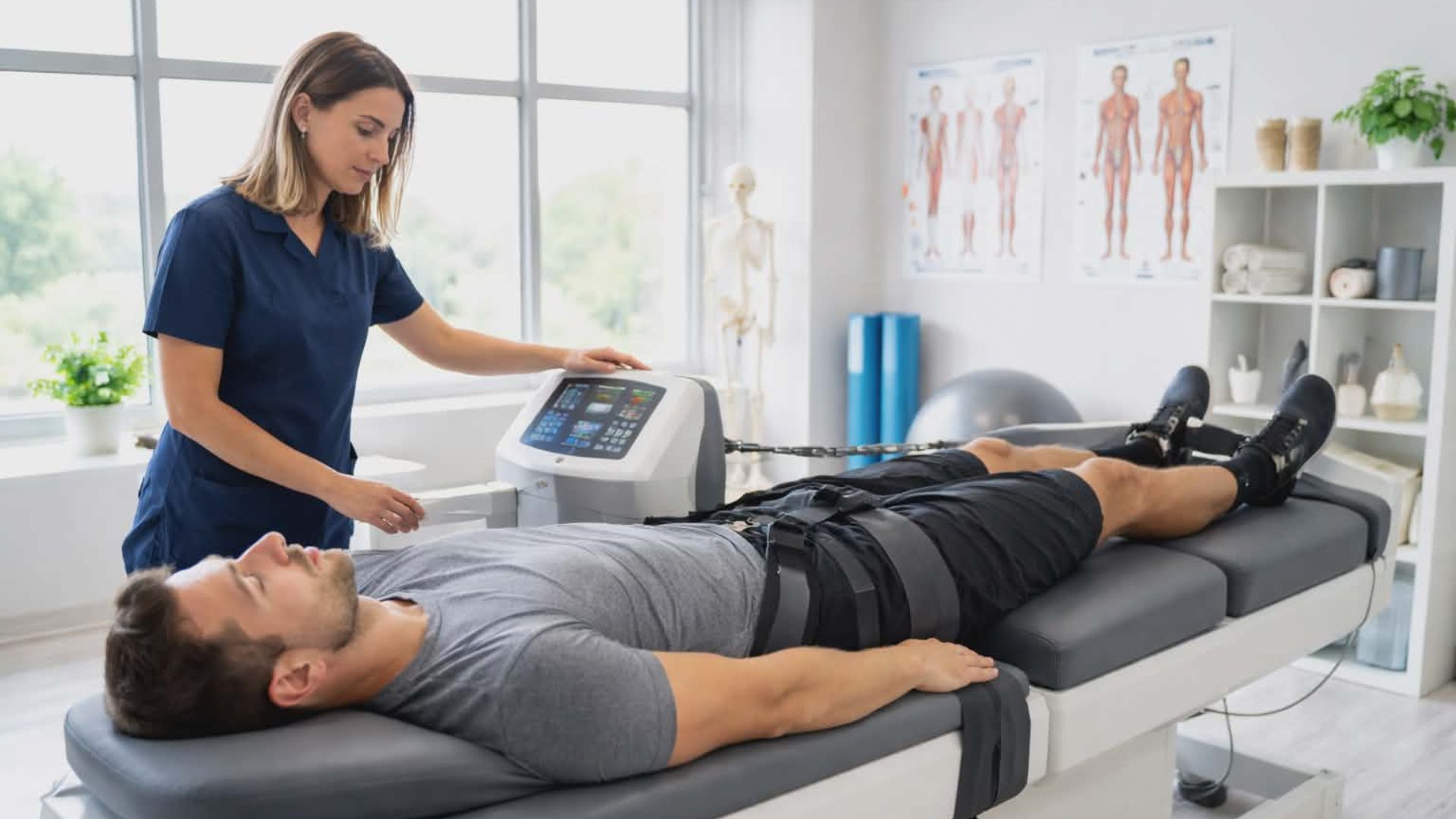
Before weighing the pros and cons of spinal decompression therapy, it helps to understand what actually happens during a session. Non-surgical spinal decompression therapy uses a special traction table that gently stretches the spine, creating negative pressure between the vertebrae.
This change in pressure within the spinal discs can encourage bulging or herniated disc material to move back into place, while also drawing oxygen and nutrients to the spine for natural healing.
It’s different from surgical spinal decompression, which involves procedures like laminectomy or spinal fusion. Non-surgical spinal decompression is minimally invasive, meaning no incisions, no anesthesia, and no extended recovery time. If you want a deeper look at what spinal decompression therapy involves, that’s a great place to start before making any decisions.
Can Spinal Decompression Therapy Cause Damage?
Let’s address the core question directly: can spinal decompression cause damage?
In most cases, no. When performed by qualified chiropractic care professionals using properly calibrated equipment, the therapy works safely within the body’s natural range of movement.
That said, spinal decompression therapy could cause harm in specific situations, primarily when it’s used on patients who aren’t good candidates for the treatment. The spine, spinal cord, and surrounding nerves and discs are sensitive structures. Applying traction incorrectly, or on the wrong patient, can aggravate existing conditions rather than relieve them.
This is not a reason to panic. It’s a reason to be informed.
Who Should Avoid Spinal Decompression?
Knowing who should avoid spinal decompression is just as important as knowing its benefits. Spinal decompression isn’t appropriate for everyone, and any honest chiropractor will tell you that upfront.
You may not be a good candidate for spinal decompression if you have any of the following conditions:
- Osteoporosis – Weakened bone density increases the risk of fracture when the spine is stretched and decompressed under traction.
- Spinal fusion or spinal implants – These alter the natural mechanics of the spinal column and can be disrupted by traction.
- Spinal fractures or bone fracture history – Applying pressure on the spine when a vertebra is compromised can worsen the injury.
- Advanced spinal stenosis – While decompression treatment may help mild to moderate cases, severe stenosis may not respond well and could worsen nerve compression.
- Pregnancy – It is important to understand the considerations around spinal decompression therapy during pregnancy before pursuing this option.
- Tumors or cancer affecting the spine – Any neoplasm near the spinal cord or nerve root rules out decompression as a treatment option.
- Spondylolisthesis – When one vertebra slips over another, spinal traction can sometimes make things worse.
- Bleeding disorders or anticoagulant use – Bleeding risk complicates any physical intervention near the spinal cord.
If any of these apply to you, your provider will likely recommend alternative approaches such as physical therapy, epidural steroid injection, radiofrequency ablation, or pain medication.
Spinal Decompression Therapy Side Effects: What’s Normal?
Most patients tolerate decompression therapy sessions well. However, these side effects can occur, especially in the early stages of treatment.
Decompression therapy side effects include:
- Temporary muscle soreness – Similar to post-workout soreness, the muscles surrounding parts of your spine may feel achy after a session.
- Mild stiffness – This usually resolves within 24 to 48 hours.
- Increased pain due to inflammation – Some patients experience a short-term flare-up before they begin to feel lasting relief.
- Nerve-related sensations – Tingling, mild leg pain, or neck pain can occur as pressure on nerves shifts during treatment.
These responses don’t mean the therapy is harming you. They often signal that the body is responding. That said, if symptoms worsen significantly or new symptoms appear, such as sharp nerve damage-type sensations or loss of function, you should contact your chiropractor or pain treatment specialists immediately.
For a thorough breakdown, reviewing the possible side effects of spinal decompression can help you set realistic expectations before your first session.
The Real Pros of Spinal Decompression
It would be incomplete to focus only on risks. The pros of spinal decompression are well-documented and meaningful for the right patients.
The benefits of spinal decompression therapy include non-surgical pain relief for conditions like herniated discs, sciatica, radiculopathy, and chronic back pain. By creating negative pressure within the disc, the therapy may allow herniated material to move back toward the center of the intervertebral disc, reducing pressure on spinal nerves.
Improved blood flow brings oxygen and nutrients to the spine, which supports tissue healing and may reduce the need for pain medication over time.
Spinal decompression therapy (opens in a new tab) may also be a practical alternative to spinal surgery for patients who meet the right criteria. It’s worth reviewing the full pros and cons of spinal decompression therapy with your care team to determine whether the benefits outweigh the potential risks for your specific situation.
What to Know Before You Start
Candidates for spinal decompression therapy should expect an evaluation that includes medical imaging, typically an X-ray or MRI, along with a health history review. Your provider may also assess nerve function through tests similar to electromyography or nerve conduction studies.
Being a candidate for spinal decompression means you have a qualifying condition, such as a herniated disc, disc bulge, lower back pain, back and neck pain, or lower back pain from nerve root compression, and you don’t have any of the contraindications listed above.
Decompression therapy may require multiple sessions before you feel meaningful relief. Your chiropractor will build a treatment plan that fits your condition, and sports medicine principles may be incorporated if your pain is activity-related.
You can also explore the potential risks of spinal decompression therapy in more depth to make sure you’re approaching this with full knowledge.
Conclusion
Spinal decompression therapy is a legitimate, non-surgical treatment option for back pain, neck pain, and disc-related conditions, but it is not right for everyone. Understanding who should and should not pursue it is essential.
If you’re in Walnut Creek and wondering whether spinal decompression is right for your situation, the team at Elite Chiropractic Rehab & Wellness (opens in a new tab) is here to help you find out. Schedule an appointment at elitecrw.com or call 925-476-5070 to connect with back pain experts (opens in a new tab) who put your health first.