
Getting spinal decompression therapy is often a turning point for people living with chronic back pain, herniated discs, or sciatica. The treatment itself is remarkably effective at relieving pressure on your spinal discs and allowing your body to begin healing. But here is something most patients do not think to ask until they are lying in bed that night: how am I supposed to sleep?
It is a fair question, and an important one. Sleep is when your body does its deepest repair work. If you are sleeping in a position that strains your spine, you could be quietly undoing the benefits of your therapy session. Getting this right matters more than most people realize.
This guide walks you through everything you need to know about sleeping after spinal decompression therapy, the positions that protect your progress, what to avoid, and how to set yourself up for the kind of rest that actually supports your recovery.
Why Sleep Position Matters So Much After Spinal Decompression
During spinal decompression therapy, negative pressure is created within your spinal discs. This draws bulging or herniated disc material back toward its proper position and encourages nutrient-rich fluid to flow back into the disc. It is a carefully calibrated process that takes consistent sessions to produce lasting results.
When you sleep poorly or in a spine-stressing position, you are adding unnecessary compression right back onto those discs. Think of it this way: your chiropractor is working to decompress your spine during the day, and a bad sleeping position is compressing it again at night. Over time, this slows your recovery and makes each session work a little less efficiently.
The good news is that a few simple, intentional adjustments to how you sleep can make a meaningful difference in how quickly you feel better.
The Best Sleeping Positions After Spinal Decompression Therapy
There is no single “perfect” position that works for everyone, but there are positions that tend to work well for most spinal decompression patients. The goal is to keep your spine in a neutral alignment – not arched, not twisted, just gently supported along its natural curve.
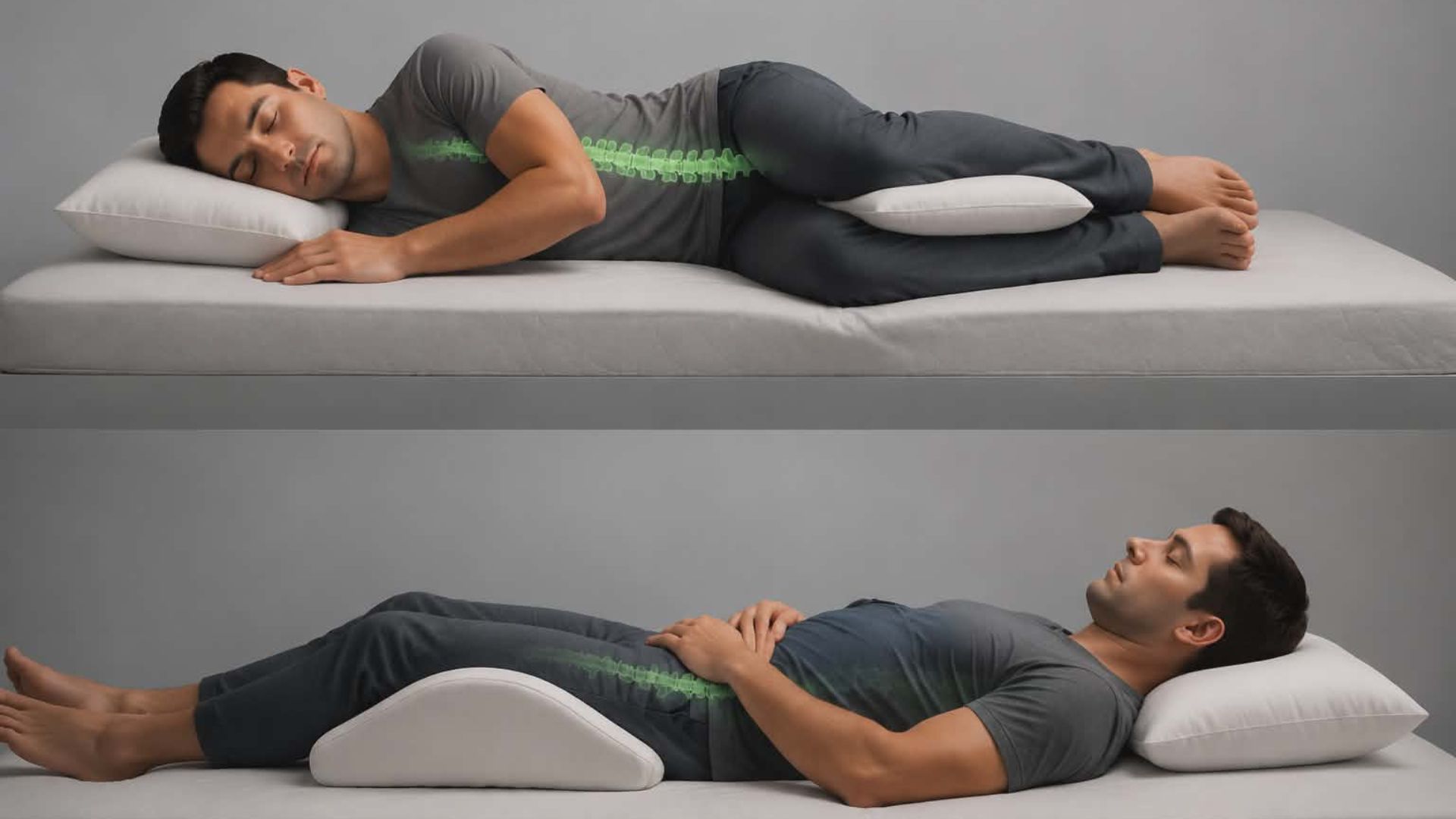
Sleeping on Your Back With Knee Support
For most people, sleeping on their back is the most spine-friendly option after spinal decompression therapy. When you lie flat on your back, your weight is distributed more evenly, reducing concentrated pressure on any one part of the spine.
The key detail here is what goes under your knees. Placing a pillow or a rolled towel beneath your knees slightly bends them, which tilts your pelvis into a more neutral position and flattens the lower back just enough to relieve tension. Without this support, the natural curve of your lumbar spine can cause the lower back to arch too far off the mattress, creating tension rather than relief.
This position is especially helpful for people dealing with lumbar disc issues or lower back pain.
Sleeping on Your Side With a Pillow Between Your Knees
Side sleeping is another solid option, but it comes with one very important condition: you need a pillow between your knees. Without it, your top leg tends to fall forward, rotating your hips and pulling your lower spine out of alignment. That twist, subtle as it seems, can undo the spinal decompression work your chiropractor has done.
When you place a standard pillow or a specially designed knee pillow between your knees, your hips stay stacked, and your spine stays straight from your lower back all the way up through your neck. This dramatically reduces torsional stress on your lumbar discs.
Try to keep your spine as straight as possible. If you notice your shoulders and hips are not aligned, shift until they are. Some people also find that placing a pillow under their abdomen when transitioning away from stomach sleeping makes the shift more manageable.
Which Side Should You Sleep On?
If you experience more pain on one side, sleeping on the opposite side is generally more comfortable. However, this is worth asking your chiropractor about specifically, because certain disc conditions respond differently depending on where the herniation or nerve irritation is located. Your care team at Elite Chiropractic Rehab & Wellness can give you a personalized recommendation based on your specific case.
Sleeping Positions to Avoid During Recovery
Just as important as knowing what to do is knowing what not to do.
Stomach Sleeping
If you are a stomach sleeper, this is one habit worth working hard to change during your recovery. When you sleep on your stomach, your neck is forced to rotate to one side for hours at a time, and your lumbar spine often arches into a stressed position. This puts significant compression on your discs and can irritate the very nerve roots your decompression therapy is trying to relieve.
Breaking the stomach-sleeping habit takes time and patience. Hugging a pillow in front of you while side sleeping can help satisfy the instinct to sleep face-down. Some people also find placing a pillow under their abdomen when transitioning away from stomach sleeping makes the shift more manageable.
Side Sleeping Without Knee Support
Side sleeping without a pillow between the knees might seem harmless, but over the course of a full night, the cumulative spinal rotation can be significant. If you are committed to side sleeping, the knee pillow is non-negotiable.
Choosing the Right Mattress and Pillow
Your bed itself plays a larger role in spinal health than most people acknowledge. A mattress that is too soft allows your spine to sag. One that is too firm can create pressure points that force compensatory tension in your muscles. Medium-firm is generally the most recommended option for people with disc-related conditions, though individual body weight and shape also factor in.
For your pillow, the goal is to keep your cervical spine (neck) aligned with the rest of your back. If you sleep on your back, a flatter pillow that supports the neck without pushing it forward works well. Side sleepers typically need a thicker, firmer pillow to fill the space between the shoulder and the head. If your pillow is too thin and your neck drops toward the mattress, you will wake up with new tension that undermines your treatment progress.
Your Pre-Sleep Routine Matters Too
How you prepare your body for sleep after a decompression session can be just as impactful as the position you choose.
A short, gentle stretch routine before bed can help release any muscle tension that has built up during the day. Focus on slow, controlled movements – nothing aggressive. Gentle knee-to-chest stretches while lying on your back are particularly useful for the lumbar spine. Ask your provider which stretches are appropriate for your specific condition, as not all movements are suitable for all types of disc issues.
Heat or ice therapy before bed can also help. Many patients find that a warm, not hot, heating pad applied to the lower back for 15 to 20 minutes before sleep relaxes the surrounding muscles and makes it easier to maintain a comfortable sleeping position throughout the night. If you are dealing with acute inflammation, ice may serve you better. Again, your chiropractor is the best person to advise on this.
Avoid sleeping in a recliner or chair regularly during recovery. While it might feel comfortable in the moment, recliners often place the spine in a slightly flexed and compressed position that is not ideal for overnight rest.
How Long Do You Need to Follow These Guidelines?
This is one of the most common questions patients ask, and the honest answer is: it depends on your condition and how your body responds to treatment. For most people undergoing a standard course of spinal decompression therapy (opens in a new tab), these sleep guidelines are most critical during the active treatment phase and for several weeks after.
As your discs heal and symptoms improve, your chiropractor will reassess your progress and may modify your recommendations. The goal is not to have you sleeping with pillows and props forever – it is to protect your healing spine during the period when it is most vulnerable.
Many patients find that healthier sleep habits, once adopted, feel so much better that they continue them long after their formal treatment ends.
Other Recovery Tips That Support Better Sleep
Sleep does not exist in isolation. What you do during the day directly affects the quality of your rest and the speed of your recovery.
Staying hydrated is surprisingly important for spinal disc health. Intervertebral discs are largely composed of water, and adequate hydration helps them maintain their height and shock-absorbing capacity. Drinking enough water throughout the day – not just before bed – supports the rehydration that spinal decompression therapy initiates.
Avoiding prolonged sitting is also important. Long periods of sitting compress the lumbar discs and can aggravate symptoms right before you are trying to wind down for the night. If your work or lifestyle involves a lot of sitting, take regular standing or walking breaks throughout the day.
According to research published by the National Institutes of Health, movement and posture management play a meaningful role in disc recovery outcomes.
Finally, communicate with your care team. If you are waking up in more pain than you went to bed with, or if a particular position consistently aggravates your symptoms, that is feedback your chiropractor needs to hear. Recovery is not a one-size-fits-all process, and adjustments to your sleep strategy are a normal part of the journey.
Frequently Asked Questions
How soon after a session can I go to sleep?
You can sleep the same night as a session. In fact, allowing your body to rest after decompression therapy is encouraged. Just be mindful of your position.
Is it normal to feel sore the next morning?
Some mild muscle soreness after the first few sessions is common as your body adjusts. However, sharp or worsening pain is a signal to contact your chiropractor.
Can I use a sleep aid during recovery?
Discuss this with your healthcare provider. Some sleep aids can affect muscle tone or awareness in ways that might cause you to shift into poor sleep positions without realizing it.
What if I keep rolling onto my stomach in my sleep?
This is common. Try placing a firm pillow against your abdomen while side sleeping. Some patients sew a tennis ball into the front of their sleep shirt as a reminder not to roll forward, a low-tech solution that actually works for many people.
Take Your Recovery Seriously – Starting Tonight
Spinal decompression therapy works. But the results you achieve in the clinic can only be sustained if you support the process when you leave. Sleep is your most powerful recovery tool, and using it well costs you nothing but a little intention.
If you are working through a disc condition or chronic back pain in the Walnut Creek area and want guidance that goes beyond the session itself, including how to sleep, move, and live in a way that supports your healing, the team at Elite Chiropractic Rehab & Wellness is ready to help. Dr. Ben Rosenstein (opens in a new tab) and Dr. Tony Cresci (opens in a new tab) take a hands-on, personalized approach to every patient’s care, and that includes helping you understand how to make the most of your treatment between visits.
Call us (opens in a new tab) at 925-476-5070 to schedule your consultation. Your spine does not stop needing care when you walk out the door – and neither do we.