
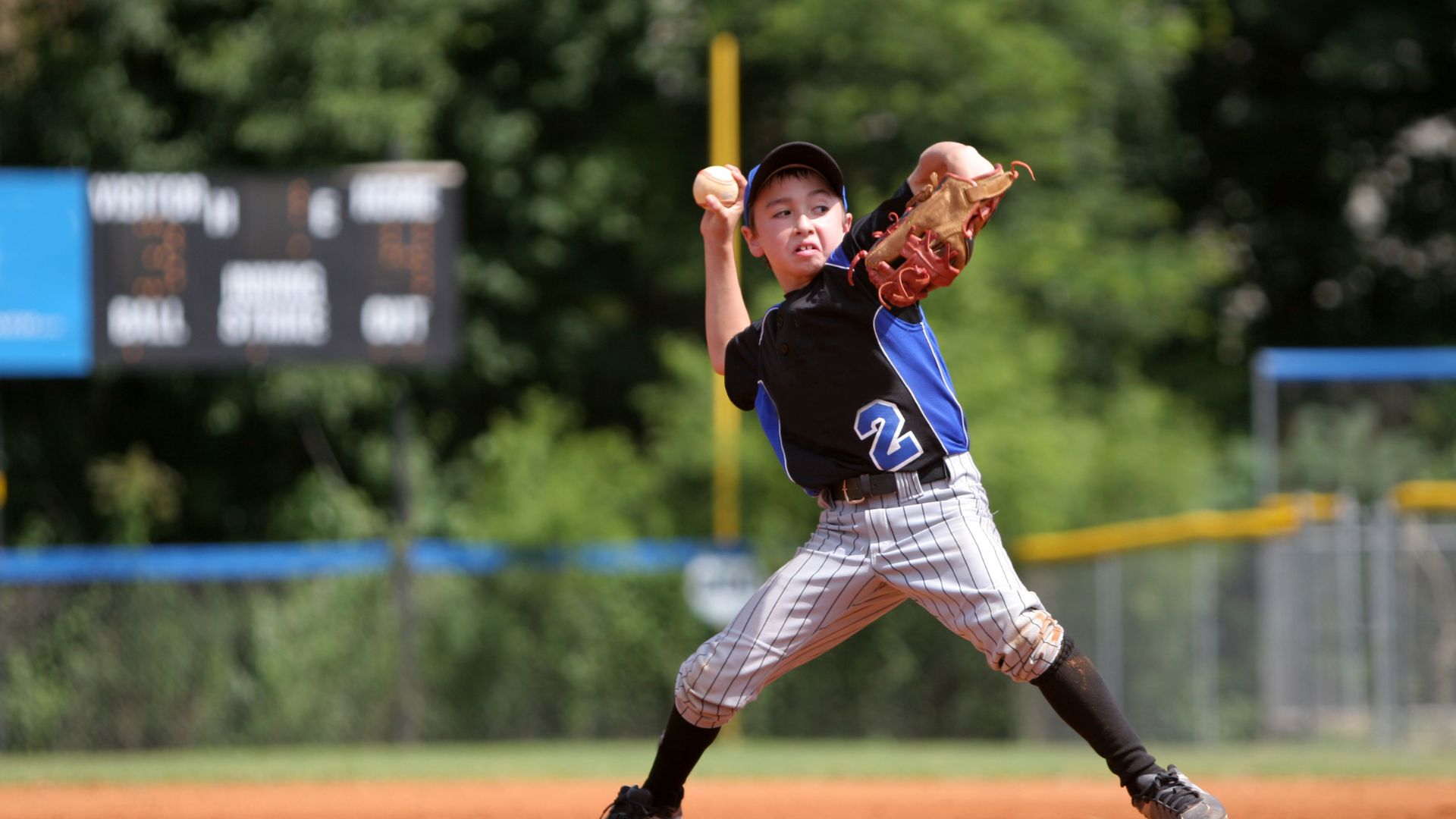
If your child loves to play baseball, watching them wind up and fire a fastball toward home plate is one of the great joys of youth sports. But behind every pitch is a surprising amount of stress on the arm – stress that, over a full baseball season, can turn into real pain or even a significant injury.
Pleasant Hill baseball families are seeing this more and more. Whether your child is throwing six innings a week or just tossing the ball around at practice, repetitive throwing puts enormous demand on still-developing bodies. And for parents and coaches, understanding how these injuries happen is the first step to preventing them.
Why Throwing Injuries Are So Common in Youth Baseball
Here is the hard truth: injuries in youth baseball players (opens in a new tab) are largely preventable, but they happen anyway. Young athletes are still growing, which means their bones, cartilage, ligaments, and muscles are not yet as resilient as an adult’s.
The growth plate – a soft area of developing tissue near the ends of long bones like the humerus (the upper arm bone) – is especially vulnerable. When a young pitcher throws pitch after pitch without adequate rest and recovery, that tissue gets stressed in ways it simply is not ready to handle.
Major League Baseball players deal with arm injuries, too, but they have trainers, physical therapists, and carefully monitored throwing programs behind them. Young players in recreational and competitive league settings often do not have the same level of support, which is why the burden falls on parents and coaches.
Young athletes playing through programs like the Pleasant Hill Baseball Association or Pleasant Hill Hawks may be practicing, playing games, and throwing frequently throughout the season, which makes rest and recovery especially important.
The Most Common Baseball Throwing Injuries in Young Players
Little League Elbow and Little League Shoulder
These two conditions are among the most well-known injuries in youth baseball. Little League shoulder involves stress to the growth plate of the humerus and often shows up as shoulder pain on the throwing side.
Both conditions are tied directly to overuse. When a young pitcher throws too many pitches without enough days of rest, these structures get irritated and inflamed – and can eventually break down.
UCL Tears and Elbow Injuries
The ulnar collateral ligament (UCL) runs along the inner elbow and takes on serious force with every pitch. UCL tears were once thought of as adult or professional-level injuries, but they are increasingly showing up in young baseball players. Poor mechanics, fatigued muscles, and high pitch counts are all contributing factors.
When the UCL is compromised, young players often notice shoulder pain and elbow pain, decreased throwing velocity, and an inability to control where the ball is going. A bad throw here or there is normal – but consistent loss of control alongside pain is a red flag.
Osteochondritis Dissecans
This is a less talked-about but serious condition where a piece of cartilage (and sometimes bone beneath it) in the elbow joint begins to separate due to reduced blood flow from repetitive stress. Osteochondritis dissecans can result in a limited range of motion and, in severe cases, requires surgery. It is especially a risk for young pitchers who throw curveballs and breaking balls at a high volume before their bodies are ready.
How Pitch Count Rules and Throwing Programs Help
Little League Baseball and most organized youth baseball leagues have implemented pitching guidelines to manage the number of pitches a young pitcher can throw in a game. These rules are not arbitrary – they are designed to reduce the increased risk of injury that comes with upper extremity overuse.
Most pitching guidelines limit the maximum number of pitches per game and require mandatory rest periods based on how many pitches were thrown. For example, a pitcher who throws 100 pitches in a game may need several days of rest before they can pitch again. Following the pitch count (opens in a new tab) closely – and enforcing it – can make a big difference in protecting young arms over a full season.
A well-designed throwing program also matters. This means structured warmups before games (opens in a new tab), a gradual ramp-up in throwing volume at the start of the season, and intentional rest periods built in throughout. Baseball and softball organizations at the youth level are increasingly recognizing this as best practice.
What Parents and Coaches Can Do Right Now
- Watch for warning signs. Shoulder pain, elbow stiffness, decreased throwing velocity, and complaints of arm fatigue during or after games all deserve attention. Do not push a young athlete to throw through pain – this is how a minor issue becomes a significant injury.
- Monitor games played and pitch count. Know the rules your league uses, and keep your own log of throws. This applies to all positions, not just the pitcher. Catchers, shortstops, and outfielders also deal with upper extremity injury risk from repetitive throwing.
- Emphasize proper mechanics. Poor mechanics create uneven stress on the forearm, elbow, and shoulder. Working with a coach who understands pitching motion and movement patterns can help a young athlete develop habits that protect them for years.
- Prioritize rest and recovery. The arm needs time to recover after high-effort outings. This is not optional – it is how the body repairs the tissue damage that naturally occurs during intense athletic effort.
How Chiropractic and Sports Rehab Can Support Young Athletes
When a young baseball player is dealing with arm injuries, soreness, or limited range of motion, a licensed physical therapist or sports rehab therapy (opens in a new tab) professional can make a significant difference. At Elite Chiropractic Rehab & Wellness in Walnut Creek, our team – led by Dr. Ben Rosenstein and Dr. Tony Cresci – specializes in chiropractic care (opens in a new tab) designed for athletes at every level.
We use a combination of chiropractic care (opens in a new tab), myofascial release, cupping therapy, and cold laser therapy to address the underlying causes of baseball throwing pain – not just the surface symptoms. Whether your young athlete is dealing with a fresh flare-up or trying to prevent future injuries before they happen, our approach is built around comprehensive strength, recovery, and performance.
Whether your child plays for the Pleasant Hill Baseball Association, the Pleasant Hill Hawks, or another local baseball program, sports rehab can help address pain, restore movement, and support a safer return to throwing.
Conclusion
Throwing injuries do not have to sideline your young athlete. By understanding the risks, following sound pitching guidelines, and catching problems early, most baseball injuries are manageable and preventable. If your Pleasant Hill baseball player is dealing with arm soreness, stiffness, or pain that is not going away, do not wait it out. Reach out to Elite Chiropractic Rehab & Wellness (opens in a new tab) at 925-476-5070 or visit us to explore how sports rehab therapy can help them stay strong, stay healthy, and keep throwing their best all season long.