You finally splurged on a new mattress. Maybe it was the memory foam everyone raved about, or the hybrid with the cooling gel layer. And yet, you still wake up with that familiar ache in your lower back, a stiff neck, or tension creeping through your hips.
Here’s something most people don’t want to hear: the mattress probably wasn’t the problem.
The way you position your body while you sleep has a far greater impact on your spinal health (opens in a new tab) than the surface beneath you. Poor spinal posture during sleep puts pressure on your lumbar vertebrae, strains the surrounding muscle groups, and can quietly turn a minor discomfort into a chronic condition over time.
How Sleep Position Affects Your Spine
Your spinal column has a natural curve. When you lie down, the goal is to maintain that curve without adding unnecessary stress to any one area. When your sleep position distorts that alignment, even slightly, you’re asking your vertebrae, intervertebral discs, and surrounding muscles to absorb pressure they weren’t designed to hold for hours at a time.
According to Hartford HealthCare, poor sleep positioning is a common contributor to back strain and musculoskeletal pain. Hartfordhealthcare.org points out that the way you rest can either support recovery or sabotage it, especially if you’re already managing low back pain (opens in a new tab) or a related health concern.
And it’s not just about pain. Disrupted sleep from discomfort can lead to sleep deprivation, which stresses the immune system, elevates cortisol, and makes it harder for your body to heal. This is why addressing sleep posture is a health issue, not just a comfort preference.
The Worst Position for Your Back
Sleeping on your stomach is, by most accounts, the most damaging position for your spine. When you lie face-down, your neck is forced to rotate sharply to one side, and your lumbar region often sinks into the bed without proper support. This flattens the natural curve of your low back and puts sustained strain on your intervertebral discs.
If you’re a stomach sleeper dealing with persistent neck or back pain, this is likely a major contributing factor.
Sleeping on Your Side: Better, But It Depends
Side sleeping is one of the more popular positions, and it can be great for your spine – but only when done correctly. The most common mistake is letting the top knee drop forward and downward toward the mattress. This rotates the hip and pelvis, pulling on the lumbar vertebrae and creating torsion through the thorax and lower back.
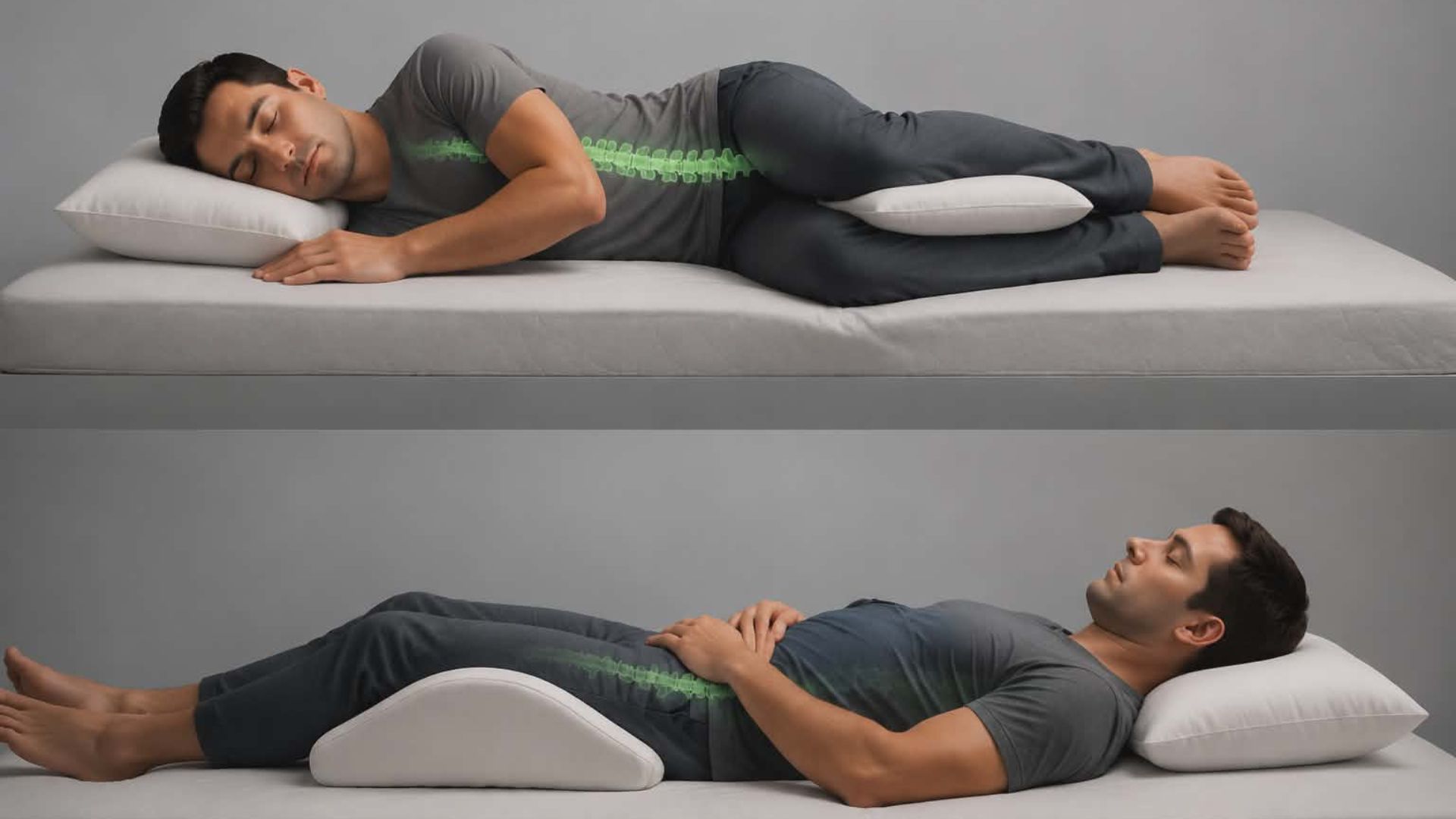
The fix is simple but often overlooked: place a firm pillow or cushion between your knees. This keeps your hips, pelvis, and spine aligned so no single joint is carrying excess load through the night.
Also, pay attention to your pillow height. If your head is propped too high or dropping too low, your neck is spending hours in a position that strains the cervical vertebrae and surrounding muscles.
Back Sleeping: Often the Best Option
Lying flat on your back is generally the most supportive position for your spinal column – provided you make one small adjustment. Placing a pillow beneath your knees takes pressure off the lumbar region and allows the natural curve of your low back to settle without tension.
Without that knee support, many back sleepers end up with their legs flat and their low back slightly lifted off the mattress, which creates a subtle but sustained strain through the lumbar vertebrae and hip flexors.
When Positioning Alone Isn’t Enough
Improving your sleep position can make a noticeable difference, but if your pain has been building for weeks or months, it may point to something deeper. A misaligned vertebra, an aggravated intervertebral disc, or chronic muscle tension doesn’t resolve on its own just because you started sleeping with a knee pillow.
This is where professional care becomes important. At Elite Chiropractic Rehab and Wellness (opens in a new tab), the team works with patients managing both acute and chronic back pain (opens in a new tab) to identify what’s driving the discomfort, whether that’s spinal misalignment, disc irritation, or soft tissue strain. For patients dealing with disc-related issues, Spinal Decompression Therapy (opens in a new tab) is one of the most effective non-surgical approaches available – relieving pressure on the discs and helping the body heal from the inside out.
A Few Practical Adjustments to Try Tonight
- If you sleep on your side, place a firm pillow between your knees and make sure your head pillow keeps your neck level with your spine.
- If you sleep on your back, tuck a pillow under your knees to reduce pressure on your lumbar region.
- If you sleep on your stomach, try transitioning gradually – start by sleeping on your side with support until the new position feels natural.
Sleep Position Changes That Can Ease Lower Back Pain
Your mattress gets blamed for a lot. But most morning back pain, neck stiffness, and hip aches trace back to how your body is positioned during sleep – not what it’s resting on. Small changes to your posture in bed can reduce strain on your spinal column and support genuine overnight recovery. If you’ve already adjusted your sleep position and the pain persists, it’s time to look deeper. Learn more about how Spinal Decompression Therapy (opens in a new tab) can help address the root cause – or call 925-476-5070 to schedule an evaluation (opens in a new tab).