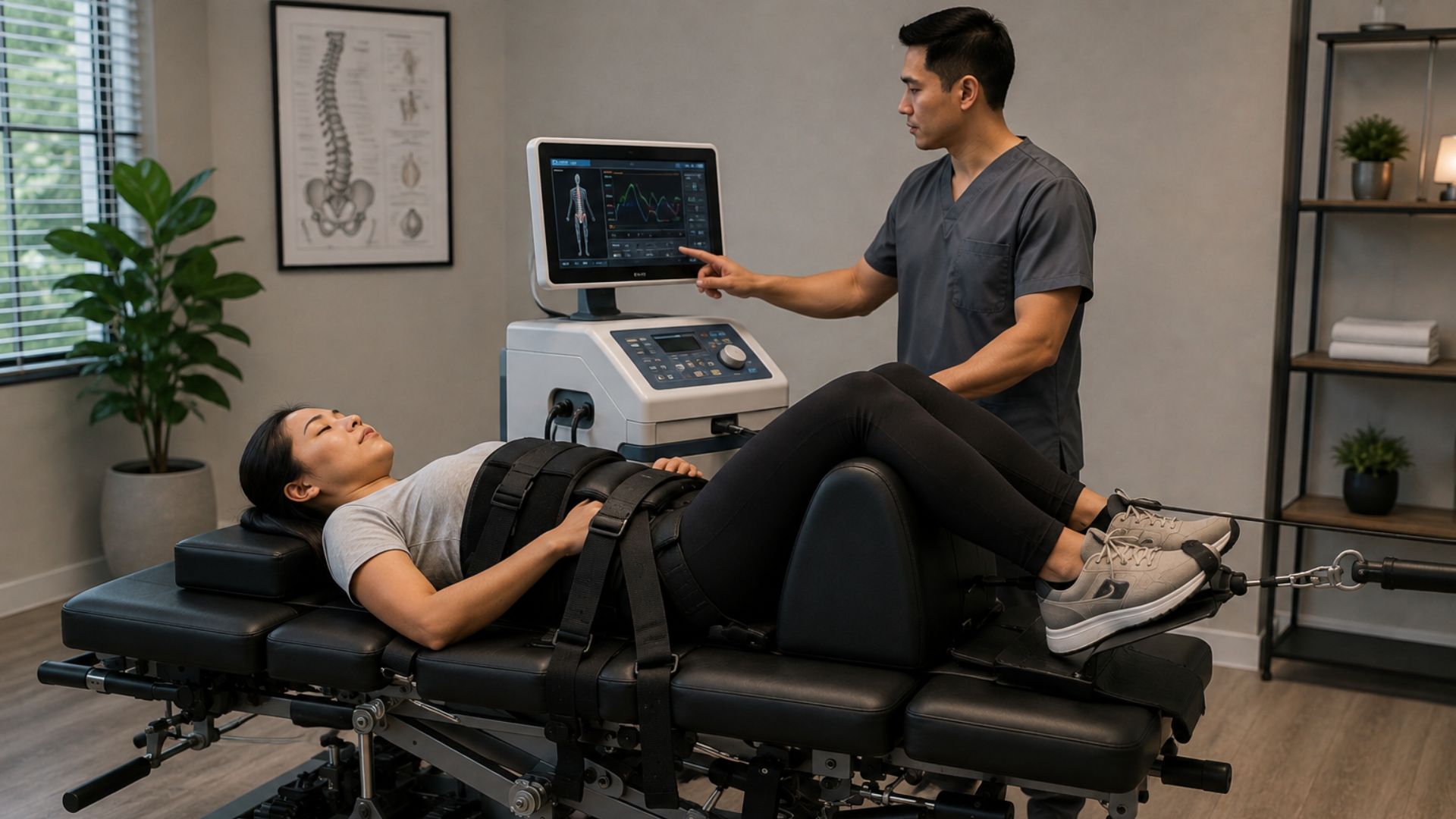
Spinal decompression therapy has helped countless patients find real relief from disc herniation, sciatica, and chronic low back pain – without surgery. But here is the part most people gloss over: this therapy is not for everyone.
Ignoring spinal decompression contraindications is not just a minor oversight. It can lead to serious complications, including serious nerve damage (opens in a new tab), worsening injury, or dangerous stress on the spinal column. Before you book a session anywhere in Walnut Creek, you need to understand who this therapy is designed for – and who it absolutely is not.
What Is Spinal Decompression and How Does It Work?
Spinal decompression is a form of motorized traction that gently stretches the spine, reducing pressure on compressed intervertebral discs. When that pressure drops, bulging or herniated disc material can retract, and nutrient-rich fluids flow back into damaged tissue. The result is less pain, reduced spasm, and natural healing.
Researchers like Ralph Gay, M.D., have studied non-surgical spinal decompression as a legitimate pain management approach, especially for patients dealing with sciatica, spinal stenosis, and degenerative disc disease. But the therapy’s effectiveness depends heavily on proper patient evaluation and screening.
The Contraindications You Cannot Afford to Ignore
This is where things get serious. A contraindication is a condition that makes a particular treatment inadvisable or outright dangerous. In the context of spinal decompression, several red flags must be ruled out before anyone gets on the decompression equipment.
Pregnancy
This one is non-negotiable. Applying traction forces to the lumbar spine during pregnancy (opens in a new tab) puts both mother and baby at risk. The mechanical distraction involved in spinal decompression therapy is simply not safe during any trimester.
Active Bone Fracture or Severe Osteoporosis
If a patient has a bone fracture anywhere along the spinal column, spinal decompression will make it worse – potentially catastrophically. The same applies to severe osteoporosis, where bone density is so reduced that even moderate traction can cause fractures. Imaging like magnetic resonance imaging or X-ray should always be reviewed before treatment begins.
Spinal Tumors or Neoplasm
Any unexplained mass near the spine – whether benign or malignant – is a hard stop. A neoplasm near the spinal cord or surrounding tissue can respond unpredictably to decompression forces, increasing the risk of serious nerve damage or tumor displacement.
Aortic Aneurysm or Vascular Disease
An aortic aneurysm is a dangerous bulge in the aorta, which runs directly adjacent to the lumbar spine. Mechanical traction in that region can place stress on an already compromised aortic wall. This is a life-threatening contraindication that requires careful review of the patient’s full medical history and cardiovascular health.
Active Infection or Spinal Disease
If there is an active infection in or near the spine, decompression therapy can spread it further. Conditions like discitis or osteomyelitis must be treated medically before any form of physical therapy or chiropractic care is applied.
Spondylolisthesis (Severe or Unstable)
Spondylolisthesis is a condition where one vertebra slips forward over the one below it. Mild, stable cases are sometimes treatable with conservative care. Severe or unstable spondylolisthesis, however, can worsen significantly with traction, causing increased nerve compression and pain.
Post-Surgical Hardware or Neurosurgery History
Patients who have had spinal fusion, implanted hardware, or recent neurosurgery are typically not candidates for spinal decompression. The mechanical forces involved can interfere with surgical hardware or destabilize a fused segment.
Signs and Symptoms That Warrant Immediate Evaluation
Some patients arrive at a clinic with warning signs they have written off as normal back pain. They are not. Seek a full evaluation before considering any decompression therapy if you are experiencing any of the following.
- Sudden loss of bladder or bowel control
- Severe leg weakness or numbness
- Unexplained weight loss alongside back pain
- Shooting neck pain with arm weakness
- Signs and symptoms that have escalated rapidly without a clear cause
These could indicate conditions like spinal cord compression, infection, or neoplasm, all of which require urgent medical attention – not alternative medicine.
Why a Proper Evaluation Matters More Than the Treatment Itself
Rushing into spinal decompression without a thorough intake process is exactly how patients get hurt. A responsible chiropractic provider will review your medical history, assess your imaging, and ask the right questions before any session begins.
At Elite Chiropractic Rehab and Wellness (opens in a new tab) in Walnut Creek, every patient is screened carefully before receiving spinal decompression therapy. Dr. Ben Rosenstein and Dr. Tony Cresci take a structured, evidence-based approach to determine who is a candidate and who needs a different path to pain relief.
What to Know Before Spinal Decompression Treatment
Spinal decompression is a powerful, effective therapy – but only when it is applied to the right patient. Contraindications like osteoporosis, bone fracture, aortic aneurysm, pregnancy, and active infection are not suggestions. They are medical boundaries that protect you from serious harm. If you are considering this therapy and want to know whether you qualify, reach out to the team at Elite Chiropractic Rehab and Wellness by calling 925-476-5070 to schedule a proper evaluation (opens in a new tab) before taking any next steps. Learn more about Spinal Decompression Therapy (opens in a new tab) and what it can do for you.