
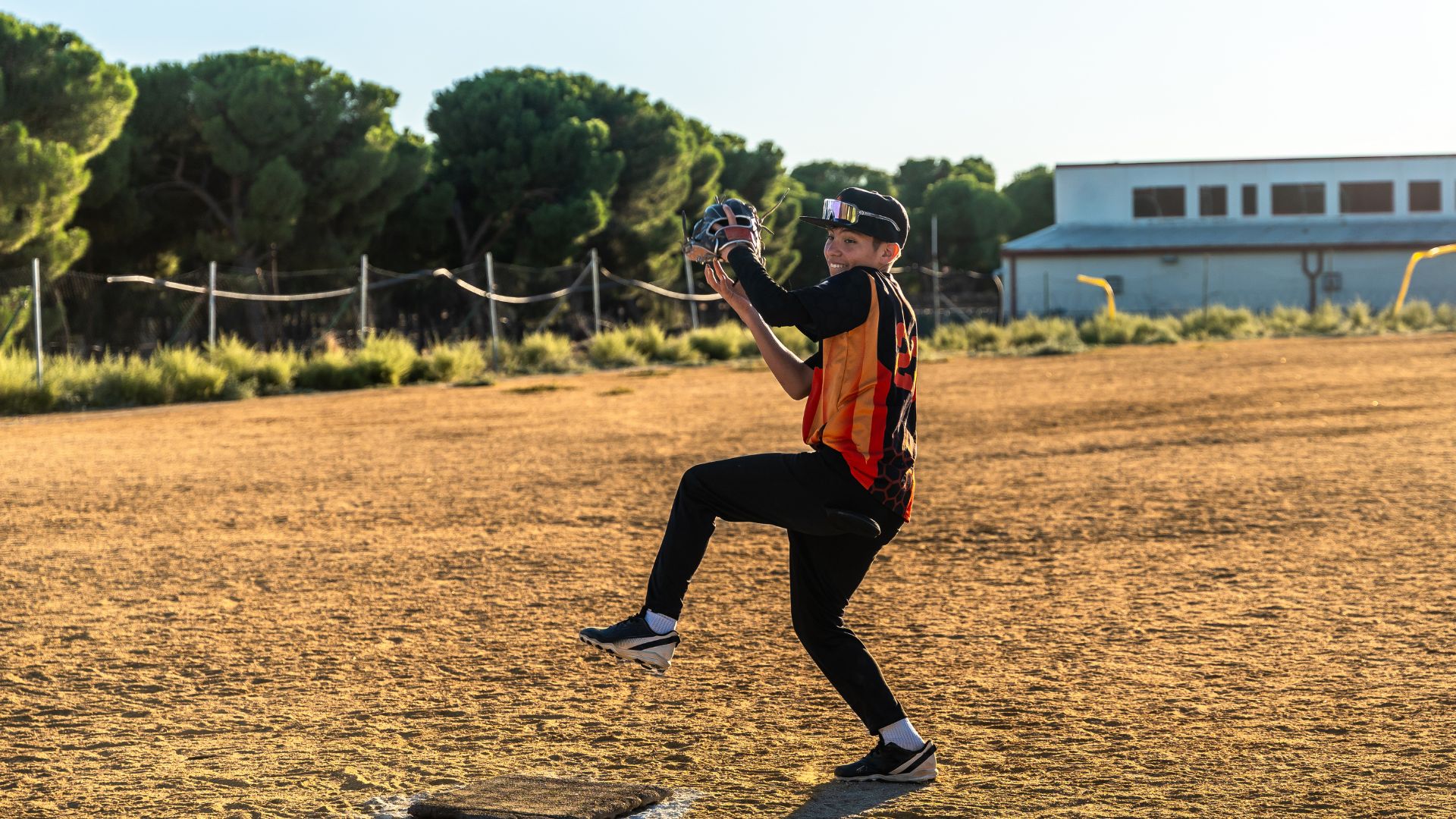
You finish a game at one of the Pleasant Hill baseball fields, and by the time you’re driving home, your arm feels like it belongs to someone else. The ache is deep, dull, and a little unsettling. You’re not sure if it’s just normal soreness or something worth worrying about.
That confusion is completely understandable. Shoulder pain after pitching is one of the most common complaints among baseball players at every level, and the causes range from minor muscle fatigue to serious baseball injury. Knowing the difference – and knowing what to do next – can protect your season and your long-term health.
Why Pitching Puts So Much Stress on the Shoulder
The throwing motion is one of the most violent movements the human body produces. During a single pitch, the arm accelerates from zero to over 7,000 degrees per second of internal rotation. The structures in the shoulder – tendons, ligaments, cartilage, and muscle – absorb enormous force with every throw.
Baseball pitching requires the rotator cuff, the labrum, and surrounding muscles to work in near-perfect coordination. When any part of that system is overloaded or breaks down, pain during or after throwing is the first signal your body sends.
This is especially important for young pitchers in programs like the Pleasant Hill Baseball Association and Pleasant Hill Hawks, where frequent practices, games, and tournaments can add up over a season.
Common Causes of Shoulder Pain in the Throwing Athlete
Rotator Cuff Problems
The rotator cuff is a group of four muscles and their tendons that surround the humeral head – the upper arm bone that sits inside the shoulder socket. These muscles stabilize the shoulder joint and control the movement of the arm during overhead throwing.
Rotator cuff injuries are among the most frequent injuries in the throwing athlete. The rotator cuff tendons can become irritated from repetitive throwing, leading to tendinitis or partial tears. In more serious cases, rotator cuff tears can develop, where the tendon is partially or fully torn away from the bone.
Tendinitis typically causes a dull, aching sensation at the front of the shoulder or back of the shoulder. Rotator cuff tears often produce weakness alongside the pain, making it hard to maintain velocity or control during a pitch.
Shoulder Impingement
Shoulder impingement syndrome occurs when the rotator cuff tendons get pinched between the humeral head and the bones of the shoulder blade. This is particularly common during the follow-through phase of the pitching motion, when the arm decelerates forcefully.
Impingement can result from overuse injuries, poor throwing mechanics, or muscle imbalances that allow the head of the humerus to shift upward in the shoulder socket. Left untreated, impingement accelerates wear on the rotator cuff and the surrounding tissue.
SLAP Tear and Labral Damage
The labrum is a ring of cartilage that deepens the shoulder socket in the shoulder blade (called the glenoid labrum). It plays a critical role in shoulder stability and also anchors the biceps tendon to the shoulder joint.
A SLAP tear – which stands for Superior Labrum Anterior to Posterior – is a labral injury that is especially common in baseball pitchers. Repetitive overhead throwing places significant stress on the labrum, and a SLAP tear can cause a sharp, catching pain deep inside the joint. Labral damage is a frequent source of shoulder pain in the throwing athlete and can contribute to shoulder instability over time.
Shoulder Instability
Shoulder instability means the shoulder is loose – the humeral head moves excessively within the shoulder socket. In a throwing athlete, this can develop gradually from repetitive throwing that stretches the ligament and capsule tissue surrounding the joint.
When the shoulder is unstable, the rotator cuff has to work harder to keep the joint centered, which accelerates fatigue and increases injury risk. Shoulder instability is one cause of shoulder pain and dysfunction that is often missed because the symptoms of shoulder looseness can mimic other conditions.
Sick Scapula Syndrome
The scapula (shoulder blade) acts as the foundation for all overhead motions. If the rotation of the scapula is abnormal – a condition sometimes called sick scapula – the entire mechanics of the throwing shoulder are thrown off.
Poor serratus anterior and shoulder girdle strength are common contributors. Loss of internal rotation is also frequently seen in pitchers with a sick scapula, which alters throwing mechanics and places added stress on the rotator cuff, the labrum, and surrounding shoulder tissues.
How Shoulder Injuries in the Throwing Athlete Are Diagnosed
A thorough physical examination by an orthopaedic specialist or sports medicine provider is the starting point. The clinician will assess your range of motion and strength, and perform specific tests designed to isolate the rotator cuff, labrum, ligament, and other structures in the shoulder.
Magnetic resonance imaging (MRI) is the gold standard for evaluating soft tissue injuries in baseball-related shoulder conditions. It provides clear images of the rotator cuff, labrum, and surrounding tissue that cannot be seen on a standard X-ray.
Treatment Options for Pitcher’s Shoulder
Initial Treatment and Conservative Care
The initial treatment for most overuse baseball injuries (opens in a new tab) and shoulder problems begins with rest, ice, and anti-inflammatory medication to manage inflammation and swelling. A structured, nonoperative treatment plan can successfully resolve most shoulder injuries in baseball without surgery.
A throwing program is typically introduced gradually once pain is managed and proper strength is restored. Rotator cuff exercises targeting the stabilizing muscles, along with addressing throwing mechanics, are central to recovery time and long-term shoulder stability.
Sports Rehab and Chiropractic Care
At Elite Chiropractic Rehab and Wellness in Walnut Creek, Dr. Ben Rosenstein and Dr. Tony Cresci work with throwing athletes experiencing shoulder pain to identify the underlying cause and build a recovery plan that gets results.
Sports rehab therapy (opens in a new tab) addresses the muscular imbalances and movement dysfunctions that contribute to injuries in the shoulder. Myofascial release, cupping therapy, and cold laser therapy can reduce inflammation in the tendon and surrounding soft tissue while supporting faster healing. Chiropractic care helps restore proper joint alignment so the shoulder joint functions efficiently during overhead motions.
The goal is to get you back to throwing with confidence – not just to manage the pain.
When Arthroscopic Surgery Is Considered
For injuries that do not respond to proper treatment, arthroscopic surgery may be recommended by an orthopaedic surgeon. Arthroscopic procedures are minimally invasive and are commonly used to repair rotator cuff tears and SLAP tears, as well as to address labral damage or severe impingement.
Recovery time after arthroscopic surgery varies, and a structured rehabilitation program is essential for a full return to baseball pitching.
Conclusion
Shoulder pain after a game is never something to brush off, especially if you pitch regularly.
If your child plays for the Pleasant Hill Baseball Association, Pleasant Hill Hawks, or another Pleasant Hill baseball team and is dealing with shoulder pain after pitching, early evaluation can help protect their season and long-term shoulder health.
Whether it is tendinitis, a rotator cuff injury, impingement, or a SLAP tear, getting an accurate diagnosis early makes a significant difference in how quickly you recover. The team at Elite Chiropractic Rehab and Wellness in Walnut Creek is experienced in treating injuries in baseball and can help you get back on the mound safely. Call (opens in a new tab) 925-476-5070 or visit us to schedule your evaluation today.