
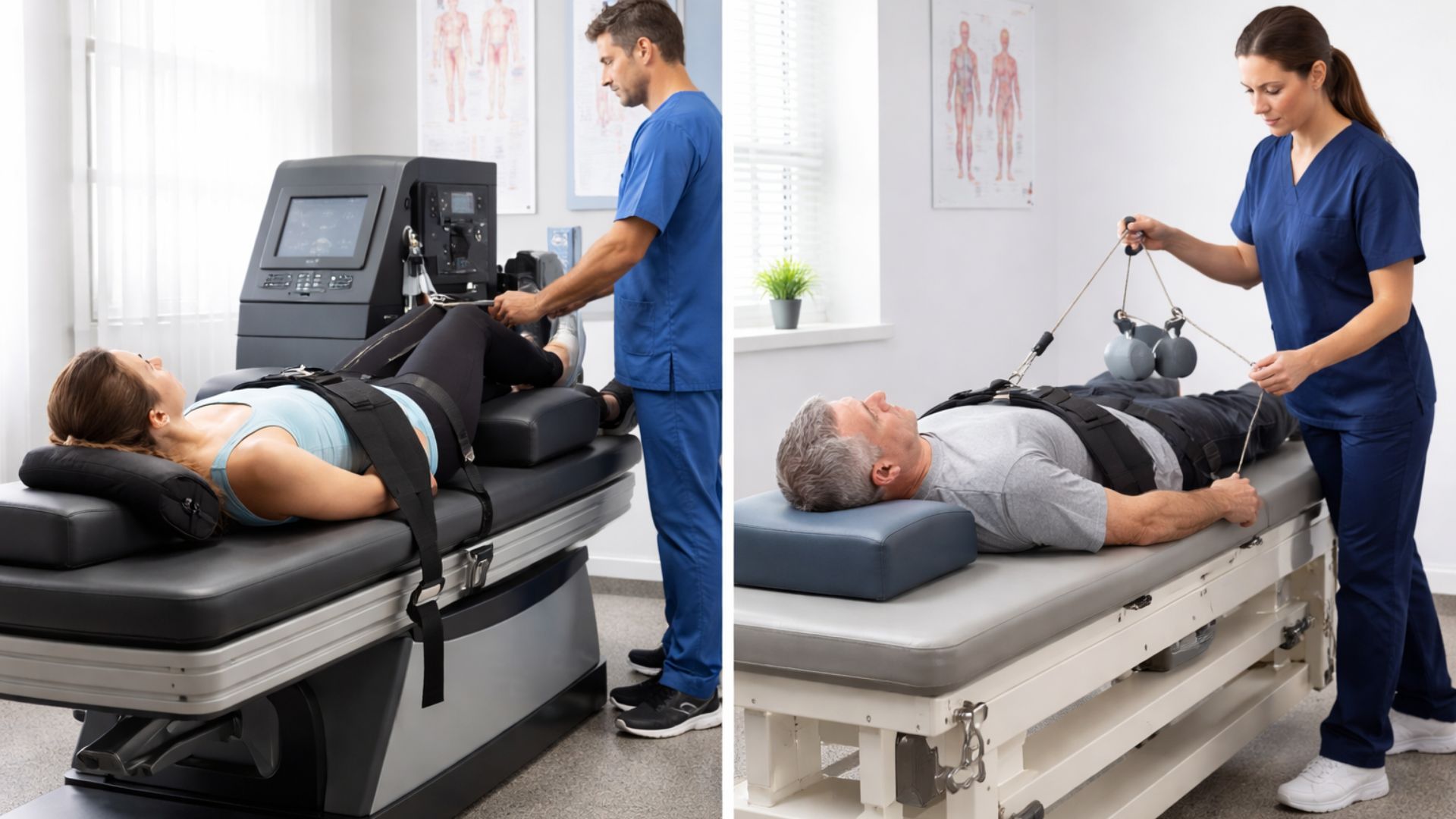
If you’re exploring options for back pain relief, you’ve likely come across terms like spinal decompression and traction. On the surface, they sound similar. Both aim to relieve pressure in the spine, ease pain, and promote healing. But are they the same therapy with different names, or is there more to it?
At Elite Chiropractic Rehab & Wellness here in Walnut Creek, we often get asked about spinal decompression vs traction. Knowing the difference between traction and decompression can help you make a more informed decision, whether you’re struggling with a herniated disc, sciatica, or just chronic back discomfort.
Let’s break it down.
Understanding Spinal Decompression: More Than Just a Stretch
Spinal decompression is a non-invasive therapy designed to gently stretch the spine in a controlled way. This therapy helps to create negative pressure within the spinal column, which can relieve pressure on the spinal discs and nerves.
How Spinal Decompression Therapy Works
Spinal decompression therapy uses a specialized decompression table or spinal decompression machine. These devices are programmed to target a specific disc or area, making decompression treatment more precise.
Key features include:
- Cyclical loading and unloading of the spine
- Targeted stretches that improve spinal flexibility
- Creation of negative pressure within the disc space, encouraging nutrients and oxygen to flow in
- Reduction of nerve compression associated with conditions like spinal stenosis and degenerative disc disease
In Walnut Creek, many patients trying non-surgical spinal decompression see benefits after a few sessions, especially those experiencing disc herniation, chronic pain, or spinal cord injuries.
What Is Traction Therapy?
Traction, sometimes referred to as spinal traction, is a broad term used in physical therapy and chiropractic treatments. It involves applying a pulling force to the spine to stretch it and relieve pressure.
This can be done manually by a chiropractor, or mechanically using a traction device or traction table.
Types of Traction Therapy
There are a few variations of traction including:
- Manual traction: A chiropractor or physical therapist uses their hands to gently stretch the spine.
- Mechanical traction: A traction table or machine applies consistent pulling force.
- Traditional traction therapy: Often used in physical therapy and orthopedic care, especially for patients recovering from injury.
While traction may relieve pain temporarily, it does not always target a specific disc or spinal segment. This is one of the primary differences between traction and spinal decompression therapy.
Spinal Decompression vs Traction: Key Differences
Here’s where things get interesting. Although spinal decompression and traction treatments share a goal – to relieve pressure and promote healing – their methods and outcomes can vary.
Feature | Spinal Decompression | Traditional Traction
|
|---|---|---|
Targeted Treatment | Yes – targets specific disc | No – general lumbar/cervical pull |
Technology | Advanced decompression systems & machine controls | Manual or basic traction devices |
Negative Pressure Created | Yes | No |
Duration of Relief | Often longer-lasting | Often temporary pain relief |
Used For | Herniated discs, degenerative disc disease, spinal stenosis | Muscle spasm, general back issues |
Monitoring | Controlled decompression table | Limited feedback during treatment |
So, when it comes to spinal decompression vs traction, what’s best for you? That can often depend on your diagnosis and personal health goals.
When to Consider Spinal Decompression Therapy
Spinal decompression therapy offers advanced benefits that traditional traction may not. It’s ideal for patients with:
- Herniated or bulging discs
- Degenerative disc disease
- Sciatica or nerve compression syndrome
- Spinal stenosis or chronic low back pain
- Patients recovering from spinal cord injury
By using a spinal decompression machine, the therapy gently stretches the spine to improve spinal health and create space for healing. It also encourages nutrient-rich fluids to enter the disc space, supporting tissue repair.
If you’re considering spinal decompression, it’s essential to talk to a health professional about your spinal condition, medical history, and goals. At Elite Chiropractic Rehab & Wellness, our team specializes in non-surgical spinal decompression and traction treatments tailored to each patient’s needs.
When Traction May Be Appropriate
Traction therapy has its place, especially when:
- The focus is relief from muscle spasm or minor strain
- You’re undergoing physical therapy for a sports injury or mild back tension
- You are dealing with temporary or mild spinal discomfort
Traction can help stretch stiff muscles, decompress spinal joints slightly, and relieve short-term spinal pressure. However, it generally doesn’t achieve the deep decompression effect necessary for more serious disc conditions.
Benefits of Traction
- Simpler and often more affordable
- Can be integrated into physical therapy and chiropractic care
- Useful for spinal stretching and improving mobility
But unlike spinal decompression technology, traction does not create negative pressure or isolate a specific injured disc.
Traction vs Spinal Decompression Therapy: Which Is Best?
Still wondering about traction vs spinal decompression therapy? Here’s a simplified breakdown of which might suit you based on your specific needs:
- For complex spinal conditions like degenerative disc disease, herniated disc, or chronic lower back issues, spinal decompression may offer longer-lasting relief.
- For temporary relief from mild strain or to support physical therapy exercises, traditional traction therapy can provide support and comfort.
Both options can relieve pressure on the spine. However, spinal decompression is typically better suited when targeting a specific disc or condition that involves nerve compression or structural disc problems.
The Role of Chiropractic in Both Therapies
Whether you choose spinal decompression or traction, working with a skilled chiropractor ensures your therapy is safe and effective. Chiropractors can integrate spinal adjustments alongside decompression or traction sessions, improving spinal alignment and reducing inflammation.
At Elite Chiropractic Rehab & Wellness in Walnut Creek, our team combines evidence-based chiropractic treatment techniques with cutting-edge decompression technology to ensure your comfort and recovery.
Choosing Between Spinal Decompression vs Traction
Ultimately, the decision between traction and decompression should be made with input from your healthcare provider. Factors to consider include:
- The source of your pain (disc-related, muscular, nerve compression)
- Medical imaging and diagnosis
- Overall goals for back pain relief or improved mobility
- Budget, time availability, and treatment plan
For those dealing with chronic back issues or recurring symptoms, spinal decompression therapy may offer advanced, lasting results that traditional traction cannot match.
Ready to Explore Spinal Decompression in Walnut Creek?
Spinal decompression and traction therapy each have their place in the world of spinal health and pain relief. Understanding the difference between traction and decompression helps you make a treatment choice that aligns with your body’s needs.
If you’re in Walnut Creek and dealing with chronic pain, a herniated disc, or pressure in your spinal column, it’s time to explore more personalized solutions. Learn more about our spinal decompression therapy and how it can help reduce pressure on the spinal discs and nerves.
Contact Elite Chiropractic Rehab & Wellness today. We’d be happy to answer your questions, explain the effects of traction vs decompression, and help you feel confident about your treatment plan.
Your spine deserves expert care, and so do you.
