
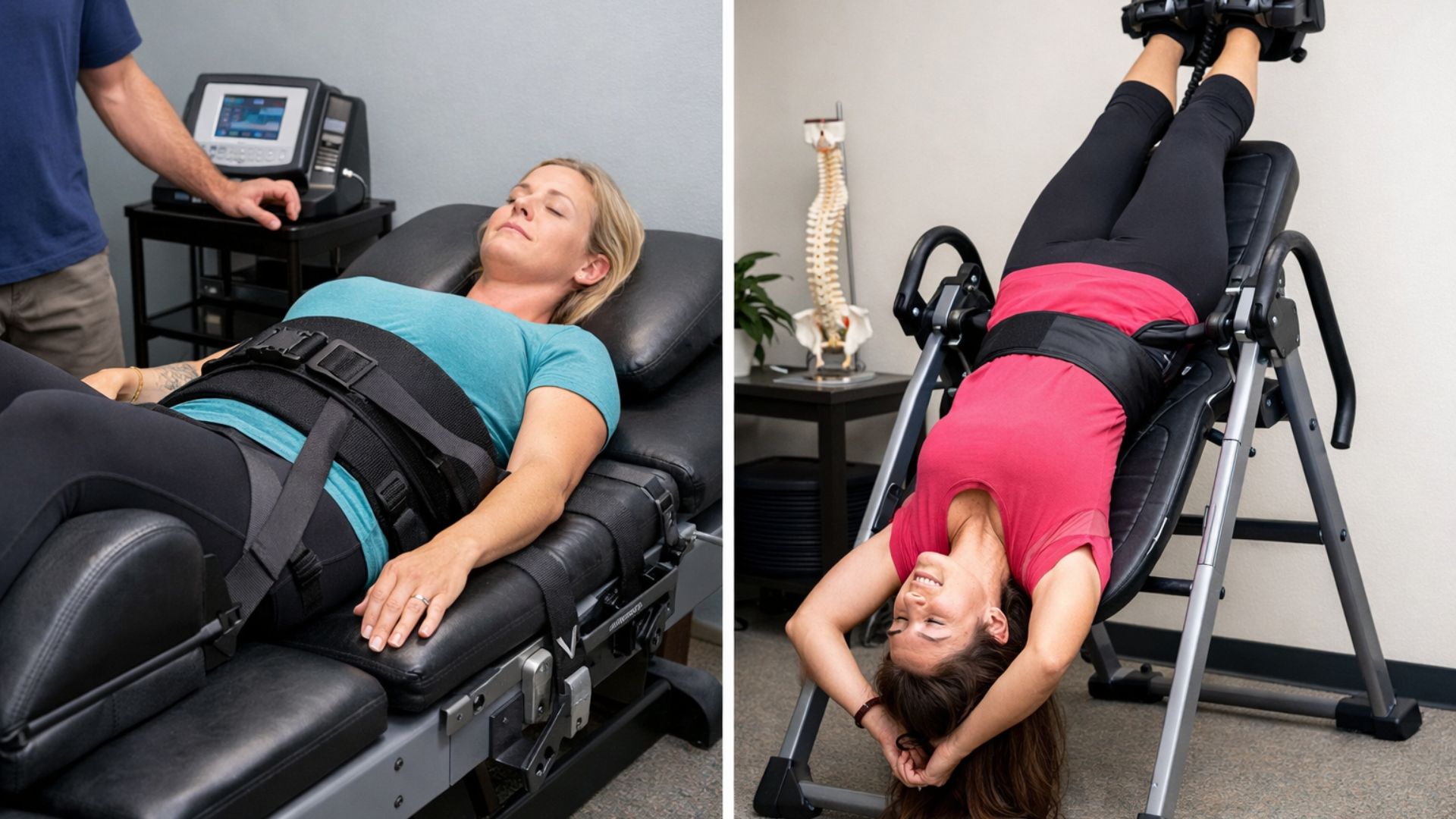
If you’re dealing with chronic back pain, herniated discs, sciatica, or general discomfort in your spine, you’ve probably come across the terms “inversion table” and “spinal decompression.” But how do you know which one is right for you?
Both claim to reduce pressure on the spine and offer pain relief, but the differences between inversion tables and spinal decompression therapy are important to understand.
At Elite Chiropractic Rehab & Wellness, we regularly help patients in Walnut Creek navigate these choices. Let’s break it all down so you can make an informed decision.
What Is Spinal Decompression?
Spinal decompression is a non-surgical therapy designed to relieve pressure on the spine, especially the lumbar region. It’s often used to treat conditions like:
- Herniated discs
- Degenerative disc disease
- Spinal stenosis
- Sciatica
- Chronic back pain
The treatment uses a specialized decompression table or traction table to gently stretch the spine. This stretching helps create negative pressure within the discs, pulling herniated or bulging disc material back into place and promoting the movement of fluid and nutrients into the disc for healing.
How Spinal Decompression Works
Spinal decompression therapy is a non-invasive procedure that targets the affected areas of your spine by:
- Using a motorized traction device or decompression table
- Applying controlled force to gently stretch the spine
- Creating negative pressure within the intervertebral discs
- Helping reduce pressure on nerves and restore spinal health
This type of therapy is typically handled by a trained chiropractor and tailored to your needs. It’s monitored and precise, making it ideal for long-term spinal health improvement.
What Is an Inversion Table?
An inversion table is a device that allows you to hang upside down or at an inverted angle. It uses gravity to stretch your spine and relieve pressure. While inversion therapy can offer temporary relief from back pain, it’s more of a general approach rather than targeted therapy.
How an Inversion Table Works
When you use an inversion table:
- The table tilts, placing you at an inverted angle or fully upside down
- Gravity pulls your weight away from your spine
- This gently stretches the spine and decompresses it
- Blood flow increases, and pressure on your spine may be reduced
Many users report immediate, albeit temporary, relief from spinal pain, especially after gym workouts or long periods of sitting.
Spinal Decompression Therapy vs Inversion Table: Key Differences
Let’s compare spinal decompression therapy vs an inversion table side by side.
Feature | Spinal Decompression Therapy | Inversion Table
|
|---|---|---|
Administered by a professional | Yes (typically a chiropractor) | No |
Targeted spinal traction | Yes | No |
Non-surgical and non-invasive | Yes | Yes |
Suitable for herniated disc | Yes | Possibly, but less targeted |
Risk of complications | Low (monitored) | Higher without supervision |
Customizable therapy | Yes (based on patient’s spine) | No |
Ideal for spinal injury cases | Yes | No |
Duration of relief | Longer-term | Usually short-term |
Inversion Table vs Spinal Decompression: Which Is Better?
The answer depends on your condition and goals. If you have a diagnosed issue like disc herniation, spinal stenosis, or chronic lower back pain, professional spinal decompression therapy is usually a better fit. It provides customized care under professional oversight and uses a computerized table for precision.
An inversion table may work for short-term relief or for relatively healthy individuals looking to stretch the spine at home. But it’s essential to understand the risks:
- Inverting may increase blood pressure and eye pressure
- Hanging upside down can strain the heart, neck, or joints
- Without professional guidance, it’s easy to overdo or misuse inversion
For serious spinal issues, it’s best to avoid inversion tables and opt for therapies that can safely and effectively decompress your spine.
Why Spinal Decompression Works for Long-Term Relief
We’ve seen firsthand how spinal decompression therapy helps restore spinal health in our Walnut Creek patients. It gently stretches the spine and reduces pressure on spinal discs using advanced traction devices. This:
- Encourages rehydration of spinal discs
- Relieves pressure on the spine and nerve roots
- Helps reduce back pain and improve posture
- Creates negative pressure within the discs to aid healing
Because the therapy is guided by experienced chiropractors, it’s a controlled, safe, and effective treatment for conditions involving the spinal cord, vertebrae, and nerve compression.
When You Should NOT Use an Inversion Table
Although many users enjoy the quick stretch from inversion therapy, the table may increase risks for people with:
- High blood pressure
- Heart disease
- Glaucoma
- Arthritis in the spine or joints
- Spinal cord injury
If you’re unsure whether to use an inversion table, consult a chiropractor first. Avoid inversion tables entirely if you’ve been diagnosed with severe spinal injury, or other spinal issues affecting the lumbar or cervical spine.
How to Use Spinal Decompression Safely
To ensure you decompress your spine safely and effectively:
- Undergo a full chiropractic evaluation
- Discuss your symptoms, including pain, inflammation, and stress-related tension
- Follow a treatment plan tailored to your spinal column and disc health
- Combine it with exercises to strengthen your back and improve mobility
At Elite Chiropractic Rehab & Wellness, our decompression table therapy is designed with long-term spine care in mind. We use spinal decompression as part of a complete plan to reduce pain without surgery and improve your quality of life.
Explore how spinal decompression therapy at our clinic may help you find lasting relief.
Conclusion: Which One Should You Choose?
When comparing spinal decompression vs inversion table, think long-term relief versus temporary easing. Inversion tables offer a quick stretch, but without professional oversight, they may not be safe for everyone, especially those dealing with spinal injury, degenerative disc disease, or spinal stenosis.
Spinal decompression therapy, on the other hand, is a professional, non-invasive approach proven to reduce pressure on the spine and discs safely. If you want to gently stretch your spine, relieve pressure on the spine, and improve overall spine health, decompression is the right move.
Have more questions, or are you curious if spinal traction is right for you? Reach out to a trusted chiropractor in Walnut Creek for a consultation and take the first step toward restoring your spinal health.
Let your next step toward back pain relief be an informed one. Try spinal decompression therapy and see how it can change your life, safely, gently, and without surgery.
