
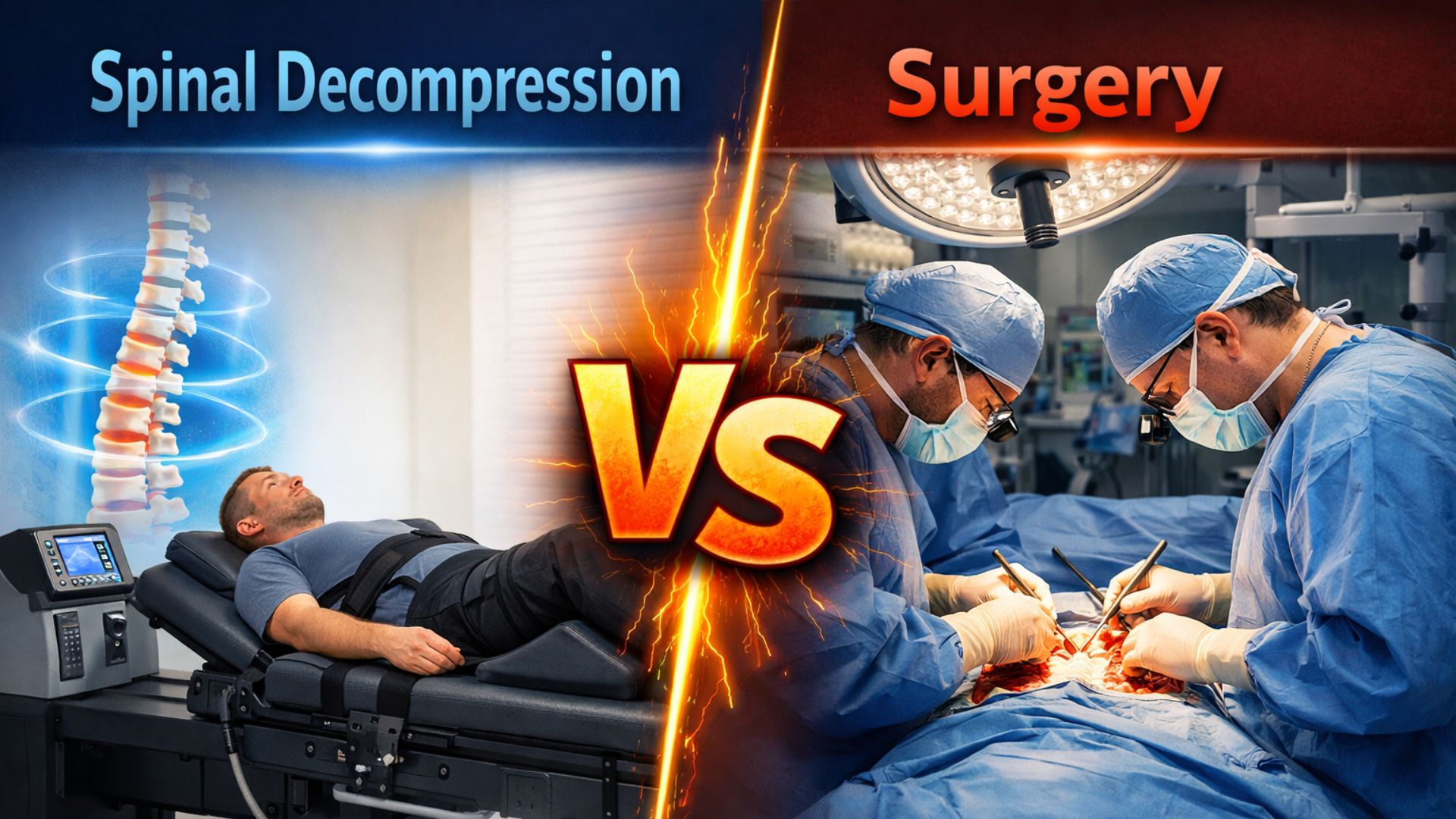
If you’re experiencing ongoing back or neck pain, terms like spinal decompression, spinal fusion, or back surgery might be swirling around in your head.
You’re likely asking: Which approach will actually reduce pain and get me back to living? Understanding spinal decompression vs surgery can help you make a more confident, informed choice about your spine health.
Let’s break down the differences, benefits, and risks of these two approaches, so you can find relief confidently.
What Is Spinal Decompression?
Spinal decompression treatment (opens in a new tab) refers to methods that aim to relieve pressure on the spinal cord or nerves, often caused by herniated or bulging discs, spinal stenosis, or degenerative disc disease.
Types of Spinal Decompression
Spinal decompression can be non-surgical or surgical, depending on the severity of the condition:
- Non-surgical spinal decompression therapy uses gentle traction to stretch the spine. This creates negative pressure that may help reposition a herniated or bulging disc and improve blood flow to the area, promoting healing.
- Spinal decompression surgery, also known as laminectomy or discectomy, involves removing part of the vertebrae or disc to relieve pressure on the spinal cord or nerve roots.
When Spinal Decompression Can Help
Non-surgical decompression works for many people suffering from chronic back pain, neck pain, or sciatic symptoms related to:
- Degenerative disc disease
- Bulging disc or herniated disc
- Nerve compression syndrome
- Minor spinal misalignments
By gently stretching the spine, spinal decompression therapy creates space in the spine and encourages healing in the intervertebral discs and surrounding nerves.
You can learn more about how spinal decompression therapy helps by visiting our page on spinal decompression therapy (opens in a new tab).
What Is Spinal Surgery?
Spine surgery is typically recommended in more severe cases where non-surgical options haven’t worked. Surgery may be performed to improve spinal alignment, relieve nerve compression, or stabilize the spine by removing a damaged disc or fusing vertebrae.
Common Types of Spine Surgery
- Laminectomy: Removes part of the vertebra to relieve pressure.
- Discectomy: Removes part or all of a herniated disc pressing on a nerve root.
- Spinal fusion: Joins two or more vertebrae in your spine to reduce pain from movement, often used for spinal fracture or spondylolisthesis.
- Stabilization surgery: Adds screws, rods, or implants to reinforce spinal alignment.
Surgical procedures often require hospitalization, general anesthesia, and substantial recovery time. They may also involve bleeding, infection, or surgical complications.
Spinal Decompression vs Surgery: Key Differences
Feature | Non-Surgical Spinal Decompression | Spinal Surgery
|
|---|---|---|
Invasiveness | Non-invasive | Minimally invasive to invasive |
Recovery Time | Minimal | Weeks to months |
Cost | Lower | Typically higher |
Risk | Low | Higher due to anesthesia, infection, and bleeding |
Use Case | Mild to moderate disc or nerve issues | Severe disc herniation, spinal stenosis, spinal fracture |
Effectiveness | Gradual improvement | Immediate relief in some cases |
When Is Surgery Necessary?
While non-surgical decompression is generally preferred first, surgery may be required if:
- There is severe spinal cord or nerve damage
- Physical therapy and decompression therapy have failed
- You’re experiencing loss of bladder/bowel function (a medical emergency)
- There’s significant spinal instability
Surgery often becomes the treatment option when chronic spinal issues have progressed to the point of disabling symptoms.
Potential Risks of Surgery
Back surgery, like any invasive procedure, carries risks that include:
- Nerve damage
- Infection
- Bleeding
- Poor healing process
- Need for additional spinal surgeries
Spinal fusion surgeries, in particular, can lead to reduced flexibility and may place added stress on surrounding vertebrae or discs.
Are You a Candidate for Non-Surgical Decompression?
If you’re suffering from chronic back pain and spinal disc issues but want to avoid surgery, non-surgical decompression could be a safer, more natural route. It may help reduce pain caused by:
- Chronic disc herniation
- Spinal stenosis
- Minor spinal misalignment
- Degenerative disc disease
You may also benefit if you’re managing conditions like sciatica or shoulder impingement syndrome without signs of nerve root damage or spinal cord injury.
What to Expect from Decompression Therapy
Non-surgical decompression therapy works by creating negative pressure in the spinal canal, encouraging rehydration of the spinal discs and reducing bulge or nerve compression.
Treatments typically:
- Take place over several weeks
- Feel like a gentle stretch, not painful
- May be combined with physical medicine and rehabilitation like massage or chiropractic adjustments
It’s a non-invasive technique with little to no downtime, often recommended before considering a type of surgery.
Final Thoughts: Spinal Decompression vs Surgery
Choosing between spinal decompression and surgery depends largely on the type and severity of your condition. While surgical intervention may be unavoidable for some, others find substantial relief with non-surgical decompression options.
If you’re considering spinal decompression or already navigating spinal issues, begin with conservative, non-invasive approaches when possible.
At Elite Chiropractic Rehab & Wellness (opens in a new tab) in Walnut Creek, we believe lasting relief starts with exploring natural, low-risk treatments designed to reduce pain and restore movement.
Don’t wait until your condition worsens. Reach out to our spine experts (opens in a new tab) to learn whether spinal decompression can help your symptoms and get you back on your feet quicker than surgery ever could.